Bedtime Procrastination and Sleep: Why We Keep Scrolling
There are nights when we are already tired, and somewhere inside we know that we should sleep because tomorrow has to begin again. Still, the phone remains in our hand. We tell ourselves, “Just five more minutes,” or “Let me watch one last reel.” Then one reel becomes another, a message appears, we check one more update, and without even realising it, bedtime keeps moving further away. This is the strange part of Bedtime Procrastination and Sleep: the body may already be asking for rest, but the mind is still looking for a little more time, a little more distraction, or perhaps simply a little more space before allowing the day to end.
Our recent Live Again India sleep series has moved from biology to behaviour. Melatonin and Circadian Rhythm explained how light, darkness and the body clock help the brain recognise biological night. Circadian Clock and Sleep added sleep pressure and the Two-Process Model. Late Night Screen Use explored how light, novelty, emotion, social cues and endless digital content can keep the brain engaged near bedtime. The next question is personal: if we know sleep matters, why do we still delay it?
Bedtime Procrastination and Sleep: What Does It Mean?
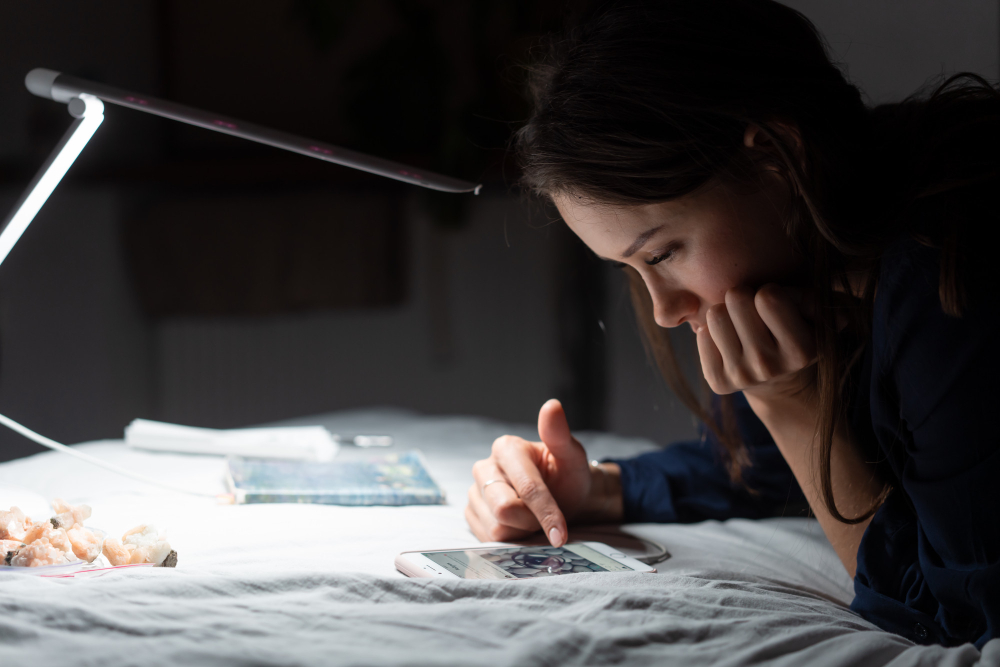
Researchers introduced bedtime procrastination as going to bed later than intended when no external circumstance is preventing it. The original 2014 study by Kroese and colleagues framed it as a form of procrastination in health behaviour and linked it with lower self-regulation and insufficient sleep. The definition separates voluntary delay from bedtime that is genuinely constrained by work, caregiving, illness or another unavoidable demand.
| A useful distinction Bedtime procrastination: “I could go to bed, but I keep delaying it.” Insomnia: “I want to sleep, but I cannot reliably fall asleep, stay asleep, or return to sleep.” The two can overlap, but they are not the same problem. |
Bedtime Procrastination and Sleep is not simply an article about phones. People can delay bedtime through gaming, television, work, reading, conversations, shopping or repeatedly finding “one more thing” to do. The smartphone matters because it makes delay portable and endlessly available, but the deeper issue is postponing a needed transition.
Why Do We Delay Sleep We Know We Need?
At first, delaying sleep can look irrational. Sleep supports attention, mood, learning, physical recovery and everyday functioning. But human behaviour is not controlled by long-term knowledge alone. At 11:45 PM, tomorrow’s energy is a delayed benefit; a funny video, conversation, game or social-media feed offers an immediate reward. When the mind is tired, the easier reward can win.
A systematic review and meta-analysis of 43 studies found that greater bedtime procrastination was moderately associated with lower self-control and evening chronotype, as well as shorter sleep, poorer sleep quality and greater daytime fatigue. The authors rated the certainty of the evidence as low and called for stronger research before causal conclusions are made. This is a meaningful behavioural pattern, not proof that one personality trait causes poor sleep.
It Is Not Simply a Problem of Weak Willpower
It is tempting to turn late-night scrolling into a character judgement: disciplined people sleep on time; undisciplined people do not. That explanation is too shallow. Bedtime is influenced by chronotype, stress, habit, workload, emotional state, family responsibilities and whether a person has had any genuine recovery time during the day.
Someone who spends the whole day responding to patients, clients, children, deadlines or household demands may reach night feeling that the day never really belonged to them. Late evening can become the only period that feels private. Giving it up for sleep may feel like losing the last remaining part of the day. This helps explain why “revenge bedtime procrastination” resonates with many people. It is not a formal diagnosis; it describes one possible motive for sacrificing sleep to reclaim personal time.
Sometimes the Phone Is Regulating an Emotion
A 2024 Sleep Medicine Reviews theoretical review proposed a bidirectional model of technology and sleep. Rather than assuming that technology always causes sleep problems, the authors noted that sleep difficulty can also lead people toward technology. They proposed two possible functions: using technology as a time filler and using it as an emotion-regulation strategy during the sleep-onset period.
A person may therefore scroll not because the content is unusually interesting, but because the phone helps them avoid silence, loneliness, worry, an argument, memories, work stress or the feeling that tomorrow is already approaching. In the short term, scrolling can work: difficult emotion -> phone -> temporary relief -> later bedtime. If that is the function, simply saying “keep your phone away” may fail because the device was solving an emotional problem, not just creating a sleep problem.
Why Endless Feeds Make Stopping Hard
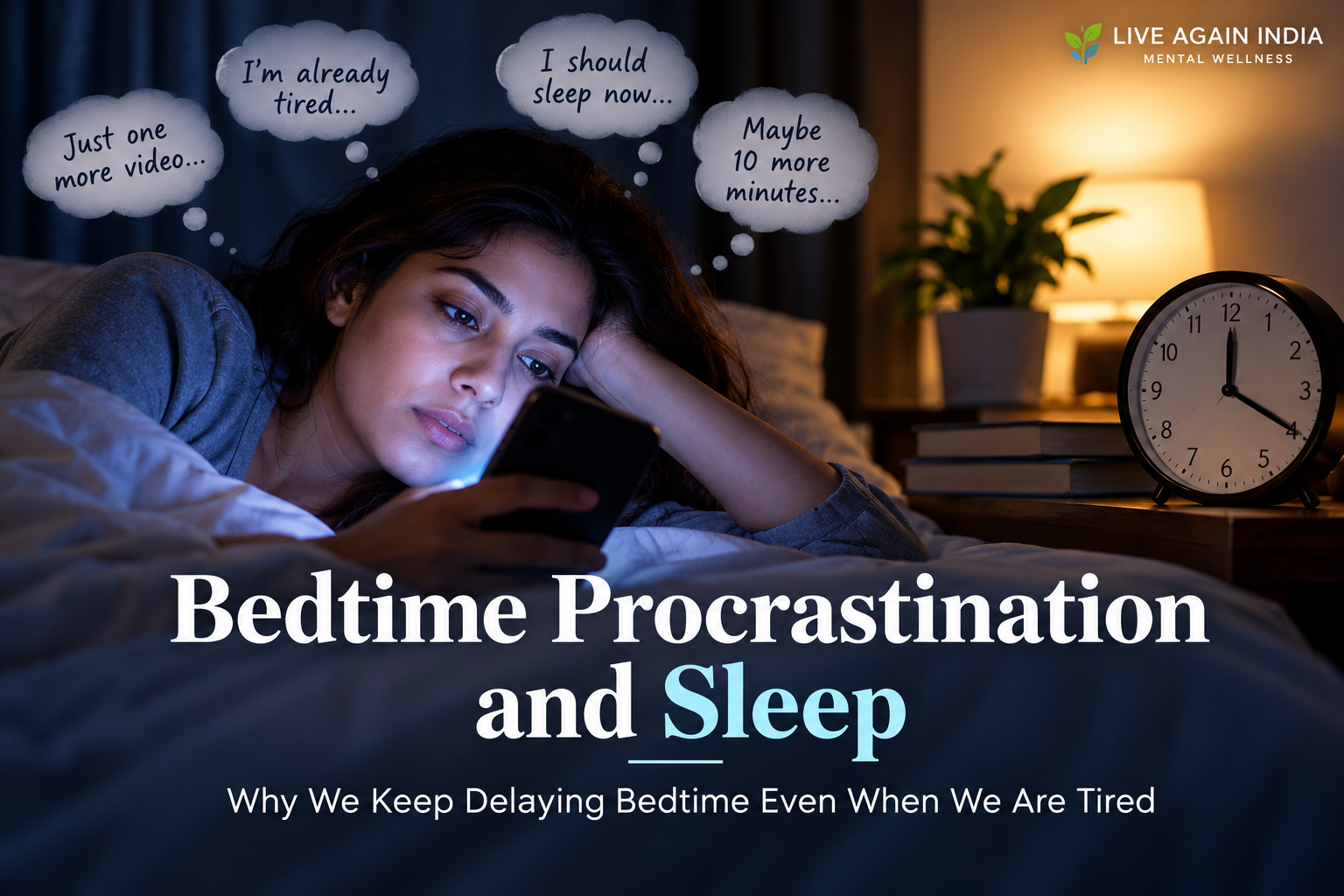
Many traditional evening activities have a natural ending. A chapter finishes. An episode ends. A conversation reaches a pause. Endless feeds are different: each swipe offers another possible reward without providing a clear stopping signal. A tired brain has to make the decision to stop again and again. The platform does not need to “make” someone stay awake; continued content simply keeps another action available.
Two people can therefore spend forty minutes on a phone after bedtime for different reasons: habit and novelty, a social conversation, anxiety when the room becomes quiet, or frustration from already being unable to sleep. The useful question is not only, “How long are you on the phone?” It is also, “What happens just before you reach for it, and what does the phone do for you in that moment?”
Bedtime Procrastination and Sleep: What Happens the Next Day?
In a 14-day study of 280 young adults, greater bedtime procrastination was associated with later sleep timing, shorter sleep duration, lower sleep efficiency and poorer self-reported restoration, even after statistical adjustment for chronotype. This does not mean bedtime delay is the only reason someone sleeps poorly, but it can become one modifiable part of the picture.
The cost is often paid the next morning. Less sleep can mean lower energy and greater irritability. The day feels harder, easy digital rewards become more attractive, evening arrives, and the person feels they deserve relief after a difficult day. Bedtime Procrastination and Sleep can then become a repeating cycle rather than a single late night.
A Better Strategy: Create the End of the Day Before You Are Exhausted
The most useful evening plan is usually not a heroic act of self-control at 12:30 AM. It is a set of decisions made earlier. The aim is not perfect sleep hygiene or complete digital abstinence, but making the transition to sleep easier and more deliberate.
- Create a real stopping point. Decide when the active digital day ends, close conversations, save unfinished content and move to an activity with a natural endpoint.
- Protect some personal time before bedtime. If nighttime scrolling compensates for a day with no autonomy, create a small period of chosen time earlier so sleep does not carry the whole cost.
- Move the phone away from the sleep position. Charging it outside arm’s reach creates useful friction and interrupts automatic checking.
- Choose content that can end. One saved article, podcast segment, episode or defined playlist is easier to stop than an endless feed.
- Name the emotion before opening the app. Ask whether you are bored, lonely, anxious, angry, avoiding tomorrow or simply not sleepy.
- Keep wake time reasonably stable. A consistent wake time helps anchor circadian timing and can make the next bedtime more predictable.
Can Bedtime Procrastination and Sleep Improve Together?
A 2023 randomized trial in 60 young adults tested a behavioural intervention designed specifically to reduce bedtime procrastination. Compared with a wait-list group, the intervention group reduced procrastination duration by about 46 minutes per day on average and improved sleep efficiency. Functional analysis also identified emotion regulation, compensation and social interaction or belonging as common reasons for delaying bedtime.
The study was small, young and predominantly female, and people with insomnia or psychopathology were excluded, so the findings are promising rather than final. Still, they support an important idea: changing bedtime behaviour may require understanding what the delay is doing for the person, not simply teaching sleep rules.
A One-Week Bedtime Delay Check
For seven evenings, record four things: the time you intended to sleep, the time you actually tried to sleep, what you did during the delay, and what you were feeling before it began. Do not use the record to criticise yourself. Look for repetition: social connection, emotional escape, entertainment, habit, an unrealistic bedtime for your chronotype, or resistance to ending the day. Different patterns need different solutions.
Bedtime Procrastination and Sleep: When It Is More Than Bedtime Delay
If you regularly allow enough opportunity for sleep but still struggle to fall asleep, wake repeatedly, wake much earlier than intended, snore loudly, gasp during sleep, experience uncomfortable leg sensations or have significant daytime sleepiness, the problem may need medical or sleep-specialist assessment. NHS guidance also recommends seeking professional help when sleep difficulty persists for months or meaningfully affects daily life.
If the phone is being used to manage severe anxiety, trauma-related memories, persistent low mood, panic, loneliness or compulsive behaviour, the sleep pattern may be only one part of a broader psychological difficulty. Do not turn sleep into a performance test. If you are in bed repeatedly monitoring whether you will sleep, the problem may be moving from bedtime delay toward conditioned arousal or insomnia.
Today’s Reflection From the Therapy Room
Sometimes the hardest part is not carrying responsibility during a crisis; it is returning to ordinary life after the crisis has passed. Today, I was reminded that the mind can become surprisingly strong when something urgent has to be done, yet avoid the quieter tasks that ask us to tolerate uncertainty, difficult conversations, or the possibility of disappointment. Recovery does not always begin when we finally feel ready. Sometimes it begins by returning—showing up, taking one honest step, and allowing action to slowly rebuild confidence. We do not have to solve everything at once. Sometimes, the next reasonable step is enough.
How a Therapist Can Help You
A therapist can help identify whether Bedtime Procrastination and Sleep is being maintained mainly by habit, emotional avoidance, anxiety, loneliness, lack of personal time, compulsive digital use or an emerging insomnia cycle. Therapy can work with the function of the behaviour rather than simply blaming the device. When conditioned wakefulness or sleep anxiety is present, evidence-based approaches such as CBT-I may be appropriate alongside broader emotional and behavioural work.
Welcome to Live Again
Welcome to Live Again. Live Again India Mental Wellness is supporting you – you are not alone if Bedtime Procrastination and Sleep repeatedly turns the end of your day into a struggle between exhaustion and “just a little more time.” The aim is not to create fear around phones or force perfect sleep. It is to understand the pattern, protect enough recovery time and help your brain and behaviour relearn a clearer, kinder ending to the day.
L@A
By Inderjeet Singh | Live Again India Mental Wellness