Hope Grows Through Action: Small Steps Toward a Better Life
A Live Again India reflection on hope, agency, small beginnings and the psychology of moving forward
Hope Grows Through Action: Why Waiting for Motivation Can Keep Us Stuck
Hope Grows Through Action when we stop treating hope as a mood that must arrive before we begin. Many of us quietly make an agreement with ourselves: when I feel confident, I will apply; when I feel better, I will exercise; when I feel less anxious, I will meet people; when life settles down, I will start taking care of myself. The problem is that confidence, motivation and emotional readiness do not always arrive first. Sometimes they are built after we take a small, realistic step and discover that we can survive the discomfort, complete the task, or create even a little movement in a life that felt frozen.
This is not an argument for forced positivity. A person facing grief, depression, financial stress, relationship pain, illness, trauma, academic disappointment or unemployment may have very real reasons to feel tired, discouraged or uncertain. Hope does not mean denying those realities. It means leaving a small opening for the possibility that today is not required to look exactly like yesterday. That opening may begin with one phone call, one shower, one page of reading, one honest conversation, one short walk, one application, one appointment, or simply getting out of bed at a planned time.
The World Health Organization emphasizes practical skills in its guide Doing What Matters in Times of Stress and notes that even a few minutes of daily practice can be useful. This fits an important psychological principle: change does not always require a dramatic beginning. Repeated, manageable actions can help us reconnect with the present, with our values and with a sense that we still have choices available to us.
Hope Grows Through Action When Life Feels Heavy
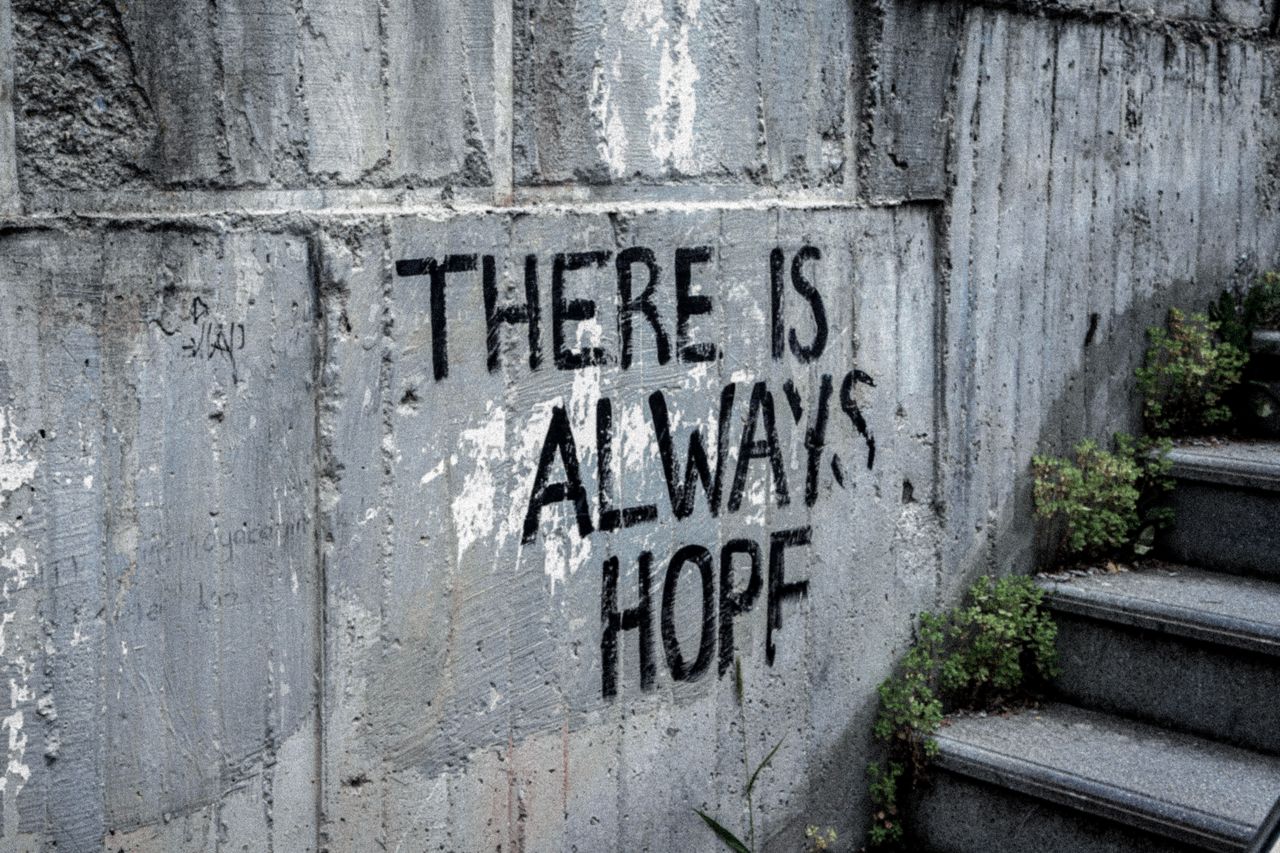
When people say, “I have lost hope,” they are often describing more than sadness. They may be describing a loss of movement. The future appears closed, daily life becomes repetitive, decisions are postponed, and the mind begins to collect evidence that nothing is changing. In such a state, even an ordinary task can feel emotionally larger than it really is. The person may know what would probably help, yet still feel unable to begin.
This can create a painful cycle. Low hope reduces action. Reduced action limits new experiences. Without new experiences, the mind receives very little evidence that circumstances or abilities can change. The same thoughts then become stronger: “Nothing works,” “I am incapable,” “I will fail again,” or “There is no point.” The person does not need a lecture about being positive. They need a small experience that interrupts the cycle.
The NHS Every Mind Matters guidance on tackling a to-do list describes how avoiding activities can initially feel relieving when mood is low, but may make low mood harder to shift over time. This does not mean every low mood can be solved by completing tasks; rather, it shows why carefully chosen activity can be part of restoring structure and momentum.
The First Step Does Not Need to Be Impressive
We often reject small actions because they do not look important enough. A ten-minute walk seems meaningless compared with the wish to become fit. Reading two pages seems trivial compared with the dream of clearing an examination. Sending one application feels inadequate when someone has been unemployed for months. Having one calm conversation feels too small when a relationship has been tense for years. Yet the nervous system learns from what we repeatedly do, not from how grandly we describe our intentions.
A small action has three advantages. First, it lowers the threshold for beginning. Second, it gives the mind concrete evidence instead of another imagined plan. Third, it creates a point from which the next action can be chosen. We are often more willing to continue after five minutes of movement than we were before we started. The first step is therefore not a miniature version of the final goal; it is a bridge between intention and participation.
Imagine a student who has avoided studying because the syllabus feels enormous. “Study for six hours” may trigger defeat before the book is opened. “Sit for twenty minutes and understand one concept” is different. The student may still feel anxious, but the task has a clear beginning and end. Completing it does not solve the examination, yet it changes something important: the student now has evidence that studying is possible today.
Hope Grows Through Action: Action Can Come Before Motivation
Popular culture often presents motivation as the engine of change: first we feel inspired, then we act. Real life is less orderly. Motivation naturally rises and falls with sleep, stress, hormones, physical health, disappointment, environment and recent experiences. If we act only on highly motivated days, consistency becomes fragile. A more sustainable approach is to create a small structure that still functions on average days.
Behavioural activation is one evidence-based psychological approach that deliberately works with the relationship between activity, avoidance and mood. Research indexed in PubMed has found that behavioural-activation-based interventions can improve depressive symptoms in appropriate clinical contexts. This does not mean that a self-help action plan replaces assessment or treatment for depression. It means that psychology has good reason to take behaviour seriously: what we do can influence what becomes emotionally possible next.
A person may not feel like meeting a friend, but a brief meeting can provide connection. Someone may not feel ready to return to the gym, but ten minutes of movement can reduce the psychological barrier to returning. A person may not feel confident enough to attend a class, yet attending while anxious can create a new memory: “I felt uncomfortable, but I stayed.” Confidence is often built from these memories of participation rather than from waiting for fear to disappear.
Hope Grows Through Action by Creating Evidence

Positive thinking without evidence can feel hollow, especially to someone who has experienced repeated disappointment. Telling yourself “I can do anything” may not be believable. A stronger route is to create modest evidence. “I made the call I had been avoiding.” “I attended even though I was nervous.” “I said no respectfully.” “I walked for fifteen minutes.” “I asked for help.” “I returned to the task after missing two days.” These statements are psychologically valuable because they are true.
Self-belief becomes more stable when it is connected to lived experience. Every small completed action becomes a data point. One data point does not rewrite a life story, but a pattern of them can. Over time, “I never finish anything” becomes harder to maintain if you have a visible record of tasks completed. “I cannot handle social situations” becomes less convincing after repeated tolerable conversations. “I always give up” begins to weaken when you practise returning after interruptions.
The American Psychological Association advises starting small and focusing on one behaviour at a time when making sustainable lifestyle changes. The principle is simple but powerful: a change that can be repeated is often more useful than an ambitious plan that collapses after three days.
Do Not Confuse a Slow Start With Failure
Many people abandon change because the early phase does not feel rewarding. They begin walking and still feel tired. They study for a week and still feel behind. They practise communication and still have arguments. They reduce screen time but still feel restless. They attend therapy and still have difficult thoughts. They interpret the persistence of discomfort as proof that nothing is working.
But new patterns often feel unnatural before they feel normal. The old pattern has repetition behind it. Avoidance may have been practised for years. Staying awake late may have become automatic. Responding defensively may happen before conscious thought. Reaching for the phone may occur within seconds of boredom. A new response is initially competing with a much more rehearsed one. It needs repetition, not perfection.
Progress may therefore look ordinary: the argument becomes shorter, not absent; the person returns to study in two days instead of two weeks; the craving is disclosed before acting on it; the anxious person stays in the room five minutes longer; the parent gives one reminder instead of ten; the professional takes one evening off without checking email every few minutes. These changes may not look dramatic from the outside, but they can represent meaningful psychological movement.
Hope Grows Through Action: Protect Hope From All-or-Nothing Thinking
One of the fastest ways to lose momentum is to define success too narrowly. If success means exercising every day, one missed day becomes “I failed.” If recovery means never feeling a craving, the appearance of a craving becomes frightening. If confidence means never feeling nervous, every social situation becomes a test. If a relationship is considered healthy only when there is no disagreement, ordinary conflict can feel catastrophic.
A more useful question is: “Did I return?” Returning is a major skill. Did you return to the routine after missing it? Did you return to the conversation after calming down? Did you return to treatment after a difficult week? Did you return to the plan after an imperfect day? Psychological growth is rarely a straight line. The ability to resume may matter more than the ability to maintain an unbroken streak.
This is where self-compassion becomes practical rather than sentimental. Harsh self-criticism often consumes the energy needed for correction. If every mistake becomes evidence that you are weak, lazy or incapable, the next step becomes emotionally heavier. A calmer review asks: What happened? What made the plan difficult? What is the smallest adjustment that makes another attempt more likely?
Hope Grows Through Action: Hope Needs Direction, Not Constant Speed
Movement is useful only when it is connected to something that matters. A person can remain extremely busy and still feel directionless. We can fill the day with notifications, errands, meetings, scrolling, household work and other people’s demands without taking one step toward our own health, relationships, learning or values. Action should not become another form of running away from ourselves.
Before choosing the next step, ask what you are trying to build. Is it health? Independence? Recovery? A calmer relationship? Professional competence? Friendship? Self-respect? Education? Rest? Once the direction is clearer, a small action has meaning. Ten minutes of walking becomes an act of caring for health. Saying no becomes an act of protecting a boundary. Opening the book becomes an act of returning to education. Calling a trusted person becomes an act of choosing connection over isolation.
The NHS five steps to mental wellbeing highlights connection, physical activity, learning, giving and present-moment attention as practical areas that can support mental wellbeing. These are useful not as a checklist for a perfect life, but as reminders that wellbeing grows through several kinds of participation: with our body, other people, curiosity, contribution and the present moment.
Hope Grows Through Action: Some Days the Action Is Rest
A motivational article can become harmful if it turns every moment into a demand for productivity. Action does not always mean doing more. Sometimes the healthy action is to stop working, sleep, eat properly, take prescribed treatment, say no to another obligation, leave an unsafe situation, ask someone else to carry part of the load, or spend time quietly without proving usefulness.
The difference lies in intention. Rest chosen to restore the body is different from avoidance that keeps us trapped. Taking a day to recover after an exhausting week can support future action. Remaining in bed for weeks while life becomes increasingly restricted may need a different response and, at times, professional assessment. The goal is not to glorify busyness. The goal is to regain the ability to choose what the situation genuinely requires.
WHO describes self-care as actions people can take to promote and maintain health and cope with illness, and its mental well-being resources encourage practical stress-management skills and reaching out to trusted people or professionals when distress becomes difficult to manage. Healthy action can therefore include both self-directed steps and accepting support.
Hope Grows Through Action: Hope in Relationships Also Needs Action
Hope is not only about career goals or personal discipline. Relationships also change through behaviour. We may spend months wishing that communication would improve while repeating the same reactions. One person criticises, the other defends, the first raises the intensity, the second withdraws, and both later wonder why nothing changes. A small interruption can create a different possibility.
The interruption may be one sentence: “I want to understand before I answer.” It may be a twenty-minute pause with a clear promise to return. It may be an apology that does not contain a hidden “but.” It may be asking permission before giving advice. It may be expressing a boundary before resentment accumulates. It may be listening without immediately solving. None of these actions guarantees that another person will change, but they change the part of the pattern that belongs to us.
This is an important boundary of hope: hope should not become a demand that we can control every outcome. We cannot guarantee another person’s response, an examination result, a hiring decision, a medical report or the timing of an opportunity. We can influence preparation, communication, treatment adherence, effort, boundaries, learning and the quality of our next decision. Mature hope lives inside that distinction.
How Hope Grows Through Action During Setbacks
Setbacks are often where hope is tested most severely. A relapse, failed examination, rejected application, relationship rupture, financial loss or return of symptoms can produce the thought, “I am back at the beginning.” Usually that is not completely true. You may be back at a difficult point, but you are arriving there with information you did not have before. You know more about triggers, mistakes, warning signs, capacities, resources and what helped previously.
Instead of asking, “How could this happen again?” only as an accusation, ask it as an investigation. What happened in the days before the setback? What changed in sleep, routine, stress, relationships or self-talk? What support reduced? What warning sign was ignored? What would an earlier intervention look like next time? This converts the setback from a verdict into information.
Beginning again is not emotionally easy. Shame may say that everyone else has moved ahead. Pride may say that asking for help is humiliating. Fatigue may say that you do not have the energy to try again. Yet recovery often begins quietly: tell the truth, return to the appointment, reopen the book, remove access to the risky behaviour, apologise, restart the routine, or ask someone trustworthy to sit beside you while you take the first step.
Hope Grows Through Action: Make the Next Step Small Enough to Do Today
When a goal remains vague, the mind can postpone it indefinitely. “I need to fix my career” is too large for Tuesday afternoon. “Update the first section of my CV for twenty minutes” is actionable. “I need to improve my marriage” is overwhelming. “Tonight I will listen for ten minutes without interrupting” is observable. “I need to become healthy” is broad. “I will walk after dinner for fifteen minutes” has a time and behaviour attached to it.
A useful next-step formula is: make it specific, small, scheduled and visible. Specific means you know exactly what you will do. Small means the task can be completed even when motivation is moderate. Scheduled means it has a place in the day instead of living in an indefinite future. Visible means you can later answer honestly whether it happened. This transforms hope from an idea into a practice.
If the step feels embarrassingly small, that may be a good sign. We are not trying to impress anyone. We are trying to build continuity. A five-minute beginning completed repeatedly can become a twenty-minute routine. A single honest conversation can make the next one easier. One alcohol-free evening can reveal something about sleep. One social exposure can challenge a prediction. One page can become a chapter. The scale can increase after the pattern becomes real.
Hope Grows Through Action: A Seven-Day Hope Practice
For the coming week, do not attempt a complete life transformation. Choose one area in which you want to experience more agency. Each evening, write one next action for the following day that can be completed in approximately five to twenty-five minutes. Keep the action connected to a meaningful direction: health, study, work, relationship, recovery, home, creativity, spirituality, social connection or self-care.
After completing it, record three things: what you expected before starting, what actually happened, and what you learned about yourself or the situation. If you did not complete it, avoid writing “failed.” Write the barrier instead: too tired, task too large, forgot, felt anxious, schedule changed, resisted asking for help. Then redesign the next action. The purpose of the record is not to grade your character. It is to understand what makes movement easier or harder.
At the end of seven days, look for evidence of direction rather than perfection. Perhaps four of seven actions happened. Perhaps one difficult phone call was made. Perhaps you discovered that mornings work better than evenings. Perhaps your anxiety remained high but you still attended. Perhaps you learned that you need medical or psychological support rather than a stricter routine. All of this is useful information.
Hope Grows Through Action: When Small Steps Are Not Enough
There are times when self-directed action should not be the only plan. Persistent hopelessness, suicidal thoughts, severe depression, inability to perform basic self-care, major changes in sleep or behaviour, psychotic symptoms, severe substance dependence, repeated self-harm, or overwhelming anxiety require professional assessment. Asking for help is itself an action, and often one of the most important ones.
Motivation should never be used to blame someone for symptoms they cannot simply think or work their way out of. A person with a mental health condition may need psychotherapy, medication, medical assessment, social support, rehabilitation, lifestyle changes or a combination of approaches. The message is not “try harder.” The message is “do not stop looking for the next appropriate form of help and participation.”
The Weekend Reflection: What Is One Thing You Can Move?
As this week ends, you may be carrying unfinished work, a difficult conversation, a delayed decision, an uncertain future, or simply the fatigue of having tried your best. You do not need to solve all of it before Monday. Choose one thing that is within your influence. Maybe it is sleep tonight. Maybe it is a walk tomorrow morning. Maybe it is calling your parents, closing the laptop, preparing your study table, deleting a risky contact, apologising, booking an appointment, or allowing yourself to rest without guilt.
Hope Grows Through Action not because every action succeeds, but because action keeps us in relationship with possibility. It reminds us that the story is still being written. The next step may not change the entire landscape, but it can change where you are standing within it. And from a slightly different position, another choice becomes visible.
How a therapist can help you
A therapist can help you identify the cycle that keeps you stuck, separate realistic barriers from fear-based predictions, and convert large goals into manageable behavioural steps. Therapy can also help you understand setbacks without shame, build confidence through graded practice, strengthen emotional regulation and decide when additional psychiatric or medical support is needed. Hope Grows Through Action most safely when the action is matched to your actual needs, capacities and circumstances rather than imposed as pressure.
Welcome to Live Again
Live Again India Mental Wellness is supporting you – you are not alone. If this week has been difficult, your life does not have to be repaired in one day; begin with one healthy and meaningful step that is possible from where you are. Hope Grows Through Action, and even a small movement toward care, connection, responsibility or professional support can become the beginning of a different direction. Your life is precious, and there is always value in giving yourself another opportunity to move forward.