
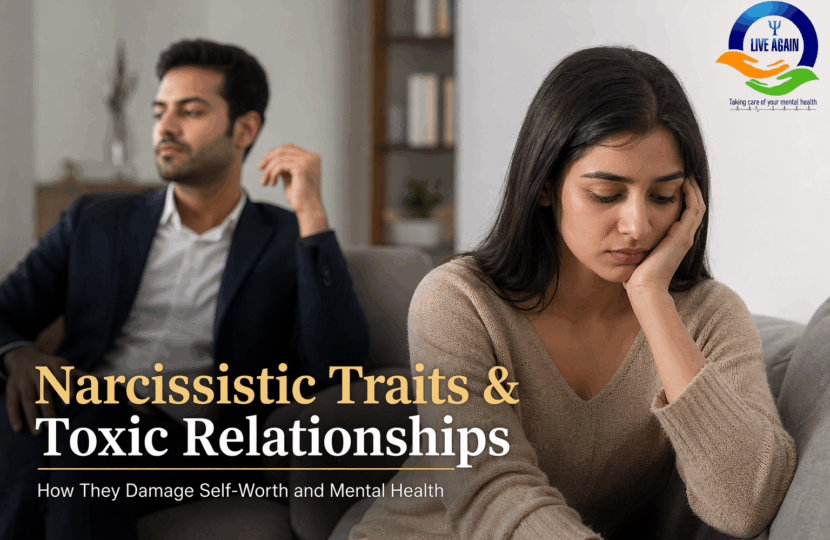
Narcissistic Traits Relationship Damage: How Toxic Patterns Affect Emotional Safety
Some relationships do not become painful in one dramatic moment. They begin with attraction, intensity, emotional pull, or the hope of deep connection. Then, slowly, something starts changing inside the person who is trying to love, adjust, explain, or hold the relationship together. Their confidence reduces. Their clarity weakens. Soon, they begin doubting their own reactions. As a result, they become more careful, more tense, and less free. This is where narcissistic traits relationship damage becomes an important topic to understand. The damage is not always loud. Sometimes it happens quietly, through repeated invalidation, control, blame, emotional imbalance, and the slow erosion of self-worth.
This article is not meant to casually label every difficult partner as narcissistic. Not every selfish, rude, immature, or emotionally difficult person has a personality disorder. However, some relationship patterns are psychologically harmful, and it is important to name them carefully. When narcissistic traits are strong in a relationship, emotional safety often begins to weaken, even if the bond still looks impressive, loving, or socially desirable from the outside.
What narcissistic traits relationship damage looks like
In simple language, narcissistic traits refer to patterns such as excessive self-focus, low empathy, entitlement, control needs, emotional invalidation, blame-shifting, and image-consciousness. They also include a repeated tendency to place one’s own importance above the emotional reality of the other person. Even so, a person with such traits may still appear charming, successful, attractive, expressive, or socially confident. Therefore, the relationship can remain confusing for a long time.
The harm usually shows up in the emotional atmosphere. One partner keeps adjusting, explaining, managing reactions, protecting the other’s ego, or trying to prevent conflict. Meanwhile, the other partner may keep dominating the emotional space, minimizing feelings, avoiding responsibility, or acting as if their needs, image, and interpretation matter more. Over time, the relationship becomes psychologically unequal.
Narcissistic traits relationship damage vs Narcissistic Personality Disorder
This difference matters a lot, because many people confuse harmful traits with a formal diagnosis.
Narcissistic traits can appear in many people at different levels. Someone may become more self-focused, less empathic, more defensive, or more controlling under stress, insecurity, immaturity, relational threat, or emotional fragility. These traits can still damage a relationship, even if the person does not have a formal psychiatric diagnosis.
Narcissistic Personality Disorder (NPD) is a formal clinical diagnosis. It should not be assumed casually just because someone is arrogant, insensitive, difficult, or self-centered. A proper diagnosis requires careful psychological or psychiatric assessment over time. The American Psychiatric Association notes that personality disorders involve enduring patterns that significantly affect thinking, emotion, functioning, and relationships.
The important therapeutic point is simple: a person does not need full NPD for a relationship to become psychologically harmful. Even without a formal diagnosis, strong narcissistic traits can still create serious emotional damage, confusion, and loss of self-worth in the other partner.
How narcissistic traits relationship damage begins slowly
Toxic relationships often do not begin as obviously toxic. Instead, they may begin with intensity, idealization, affection, charm, emotional pursuit, fast bonding, or the feeling that someone finally understands you deeply. In the beginning, the person may appear highly attentive, highly expressive, or unusually invested. Naturally, this can create strong emotional attachment.
Then the pattern slowly shifts. Small dismissals begin. Boundaries are tested. Criticism becomes sharper. Emotional reciprocity becomes unequal. In other words, the other person’s feelings are heard only when they do not challenge the narcissistic partner’s comfort, self-image, or control. Gradually, the bond starts producing more confusion than peace.
That is why many people do not recognize the problem early. The relationship did not begin with obvious cruelty. It began with hope.
Why “Mr. Right” or “Miss Right” can still damage mental health
This is one of the most painful realities in toxic relationships. A person may look ideal from the outside. They may be attractive, articulate, polished, ambitious, successful, emotionally intense, or socially admired. They may even appear like the perfect partner to family, friends, or the wider world. However, inner relationship life and outer image are not always the same thing.
A person can look like “Mr. Right” or “Miss Right” and still gradually damage someone’s self-worth and mental health. The damage may happen through subtle superiority, invalidation, emotional coldness after closeness, control disguised as concern, repeated blame, or the feeling that your voice matters only when it supports their comfort.
This becomes even more confusing because the injured partner often starts asking, “If this person is so impressive, why am I feeling smaller in this relationship?” They may blame themselves rather than recognizing the psychological imbalance. The outer image of the relationship can hide the inner emotional harm.
Common signs of narcissistic traits relationship damage
Emotional invalidation
Your feelings are dismissed, mocked, minimized, or treated as overreaction. You may be told that you are too sensitive, too emotional, too needy, too difficult, or imagining things. After repeated invalidation, people stop trusting their own emotional reality.
Blame-shifting and gaslighting
The other person avoids genuine responsibility. Even when they hurt you, the conversation somehow ends with you apologizing, doubting yourself, or feeling that you created the problem. Gaslighting-like patterns can make the injured partner question memory, judgment, and emotional truth.
Need for control
Control is not always loud or aggressive. Sometimes it appears through tone, timing, pressure, emotional withdrawal, financial control, social restriction, sexual entitlement, or constant subtle correction. The goal is often the same: to dominate the emotional field.
Lack of genuine empathy
They may intellectually understand your pain, but they do not hold it with real emotional care. Your distress becomes inconvenient when it interferes with their comfort, image, or control.
Idealization and devaluation
At times you may feel deeply wanted, praised, or pulled close. At other times, you may feel criticized, emotionally abandoned, compared, or treated as if your value has dropped. This swing creates confusion and strengthens emotional dependence.
Why narcissistic traits relationship damage feels so confusing
The confusion comes from mixed signals. There may still be affection, attraction, intimacy, dependence, or occasional warmth. There may even be moments of apology, tenderness, or apparent understanding. Because of this, hope stays alive. The injured partner starts thinking that if they explain better, love better, wait longer, or become calmer, the relationship may stabilize.
But the deeper pattern often remains the same. Repeated invalidation, control, blame, and emotional inequality continue under different forms. This creates a bond that is hard to leave and hard to fully trust.
The nervous system also gets affected. The person may become hypervigilant, mentally preoccupied, emotionally exhausted, and increasingly unsure of what is normal. They may start scanning for mood shifts, disapproval, withdrawal, or criticism. Over time, this becomes not just a relationship problem, but a mental health burden.
How narcissistic traits relationship damage harms self-worth and mental health
This is where the real injury becomes visible.
A person in such a relationship often starts becoming smaller from the inside. They lose confidence. They overthink. They rehearse conversations before speaking. They walk on eggshells. They feel guilty for having ordinary emotional needs. In time, they become ashamed of their reactions. Eventually, they stop trusting their own perception.
The mental health effects may include:
- chronic self-doubt
- overthinking and mental replay
- shame and confusion
- anxiety and hypervigilance
- emotional exhaustion
- social withdrawal
- reduced confidence in decision-making
- sleep disturbance
- loss of joy and inner spontaneity
- gradual erosion of dignity and self-respect
The NHS page on domestic abuse and emotional harm highlights that emotional abuse can include humiliation, control, blame, intimidation, and repeated undermining. These patterns can deeply affect emotional wellbeing and mental health.
How narcissistic traits relationship damage affects family and love life
The damage does not stay limited to the couple. Marriage, parenting, in-law relationships, household atmosphere, and children’s emotional environment can all be affected. When one person repeatedly dominates, invalidates, or destabilizes the emotional field, the whole home can become tense.
Children may witness emotional inequality, criticism, silent tension, or relational instability. One partner may become chronically burdened, while the other continues to occupy the center of emotional attention. Love life also suffers because affection becomes mixed with fear, performance, resentment, or emotional debt.
Sometimes the outer family sees only the socially presentable part of the relationship and misses the daily psychological strain. This makes the injured partner feel even more alone.
Why people stay in toxic relationships
This question must be approached with compassion, not judgment.
People stay for many reasons. For example:
- hope that things will improve
- emotional dependence
- fear of abandonment
- financial pressure
- family pressure
- children
- shame about leaving
- trauma history
- low self-worth
- intermittent positive moments that keep the bond alive
Some stay because the relationship did not begin as obviously toxic. Others stay because they keep seeing glimpses of the person they first loved. Still others stay because they are exhausted and no longer trust their own judgment enough to leave clearly.
What healthy boundaries begin to look like
Boundary work is not about becoming cold, arrogant, or revengeful. It is about protecting emotional dignity and mental clarity.
Healthy boundaries may begin to look like this:
- naming disrespect clearly
- reducing over-explaining
- not arguing with every distortion
- protecting your emotional energy
- stopping the habit of proving your reality again and again
- separating guilt from responsibility
- seeking support outside the toxic bond
- not allowing repeated access to your mind through fear, manipulation, or emotional pressure
At first, boundaries may feel uncomfortable. This is because the person has often been trained to over-accommodate. However, boundaries are not cruelty. They are mental health protection.
Can therapy help in narcissistic traits relationship damage?
Yes, therapy can help deeply. However, the kind of help matters.
Individual therapy can help the injured person rebuild emotional clarity, strengthen self-respect, understand the relational pattern, reduce self-doubt, process trauma-like confusion, and make decisions with less fear. Therapy can also help with nervous system regulation, grief, anger, shame, and rebuilding life after prolonged emotional harm.
Couple therapy may help in some cases, but not in all. If one partner has very low accountability, very low empathy, or repeatedly uses therapy language only to regain control without real change, then couple work may become limited or even counterproductive. Therefore, safety, accountability, and emotional reality must remain central.
The APA’s information on partner abuse and relational harm supports the importance of recognizing harmful patterns early and protecting psychological wellbeing.
How a therapist can help you
A therapist can help you identify unhealthy relational patterns, separate confusion from reality, and understand how repeated invalidation or control may be affecting your mind. Therapy can also help rebuild boundaries, restore self-trust, reduce emotional exhaustion, and support recovery from prolonged relationship damage. The aim is not only to leave or stay. Rather, the aim is to become clearer, safer, and psychologically stronger. Healing begins when the person stops losing themselves inside the relationship.
Welcome to Live Again
Welcome to Live Again. Live Again India Mental Wellness is supporting you—you are not alone. If a relationship has slowly made you doubt your feelings, your voice, or your worth, that pain deserves understanding and care. Emotional clarity, dignity, and safer relationships are possible. With support, awareness, and the right therapeutic direction, recovery can begin.
Today’s Reflection From The Therapy Room
Toxic relationships do not always begin with obvious cruelty. Many begin with charm, longing, intensity, and the hope of being deeply seen. Then, slowly, the person starts losing contact with their own emotional truth. The deepest damage is not always the argument or the insult. Sometimes, it is the quiet loss of inner clarity. Recovery begins when the person remembers that confusion is not love, fear is not safety, and self-erasure is not intimacy.
For readers who also struggle with emotional confusion and mental looping after difficult relationships, you may also find this helpful: How to Stop Overthinking.
L@A


