Information Consumption and Mental Health: From Shared Reality to Personalized Illusions
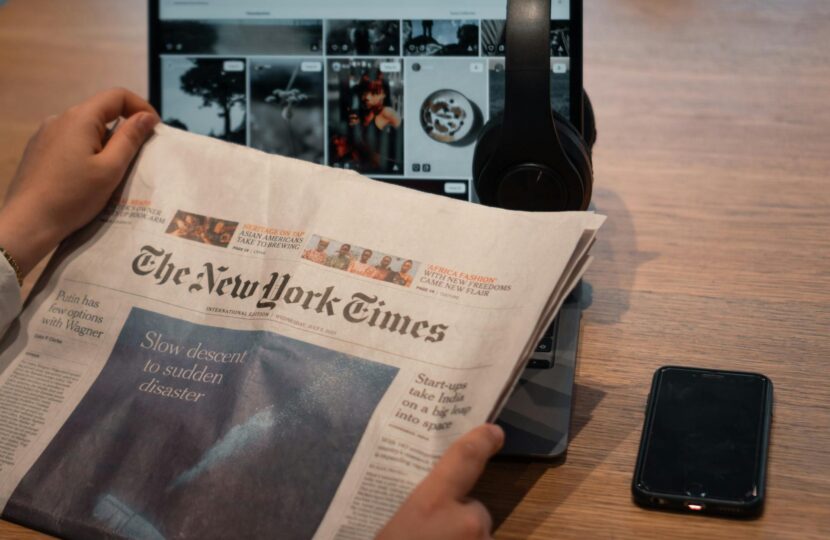
There was a time when many people began the day with a newspaper, a cup of tea, and a calmer, more limited understanding of what was happening in the world. Today, information often arrives through alerts, reels, feeds, clips, and endless scrolling. The shift is not only technological. It is also emotional, cognitive, and psychological. Information consumption mental health has become an important modern concern because the way we receive information now can shape attention, stress, emotional tone, and even our sense of reality. Pew Research Center
Information Consumption Mental Health and the Older Shared Reality
Traditional newspapers were not perfect, but they usually offered structure. The reader saw a beginning, a middle, and an end. Editorial teams filtered stories, prioritized topics, and placed different events into a common frame. Even when people disagreed politically or socially, they were often still reacting to a relatively shared set of headlines and facts. That older style of information delivery gave the mind more containment and fewer interruptions.
Psychologically, a structured information experience can be easier to process than an endless one. Human attention works better when stimulation has boundaries. Reflection becomes more possible when information is paced. In older media environments, people could step away after reading. Today, many people do not experience that same closure. The feed does not really end. It simply continues.
In simple terms, earlier information systems often informed people without occupying their mind all day. It entered the mind, but it did not remain as a constant stream. This difference matters because mental health is not shaped only by what we know, but also by the way information enters our nervous system. American Psychological Association
Information Consumption Mental Health in the Age of Algorithmic Feeds
Today, many people do not receive information from one common source. They receive it through personalized systems shaped by clicks, pauses, shares, watch time, likes, searches, and emotional engagement. That means for many people, information is no longer simply found; it is delivered through platforms designed to keep attention engaged. Pew Research Center
This is where information consumption mental health becomes more complex. A person may feel informed, yet the feed they are seeing is often selective, emotionally intensified, and behavior-shaped. One user may see crisis after crisis. Another may see outrage. Another may see fear, conflict, or ideological certainty repeated in different forms. Over time, this can create not just personalized content, but personalized versions of reality.
The psychological difference is powerful. When information is constantly filtered through engagement-based systems, the mind is exposed not only to facts but also to emotionally amplified patterns. Repeated exposure to such patterns can gradually influence vigilance, mood, and the ability to think flexibly. The person may not even notice that their emotional climate is being shaped while they scroll.
How Information Consumption Mental Health Gets Affected by the Brain’s Threat System
The brain can tolerate stress, uncertainty, and novelty in limited doses. But repeated activation without recovery starts becoming costly. Digital information feeds often combine three things that strongly capture human attention: unpredictability, repetition, and emotional intensity. This combination can keep the nervous system leaning toward alertness rather than recovery.
Several psychological mechanisms help explain why. Negativity bias makes distressing content more memorable than neutral content. Confirmation bias makes people more likely to notice and hold onto information that matches their prior fears or assumptions. Fear of missing out encourages repeated checking. Repetition can create familiarity, and familiarity can start feeling like truth, even when a person has not deeply understood the issue.
There is also a behavioral loop involved. A person feels uncertain, checks the phone, finds stimulation, feels briefly relieved or further activated, and then checks again. Over time, repeated negative scrolling can become a habit loop rather than a healthy way of staying informed. PMC
Hidden Costs of Information Consumption Mental Health Problems
One of the most important concerns is that the damage can be subtle. A person may not say, “Information overload is harming me.” They may simply say they feel tired, mentally crowded, tense, irritable, distracted, or unable to switch off. Yet these are often the forms in which unhealthy media exposure begins to show itself.
Another major issue is cognitive overload. When the mind keeps absorbing fragmented, emotionally charged updates, it has less room for deeper reflection and more difficulty holding complexity. Too much information can itself become psychologically difficult to manage. World Health Organization
Information consumption mental health is also affected through attention fragmentation. A person who is always jumping between headlines, comments, clips, and emotional reactions may gradually train the mind to scan rather than understand. This may weaken sustained attention, reduce patience, and increase impulsive interpretation. In everyday life, this can look like mental fatigue without clarity.
Hypervigilance is another hidden cost. If the mind is repeatedly exposed to threat-heavy content, it may begin to expect danger more often than the situation actually requires. That does not mean all information is harmful; it means emotionally saturated exposure can be psychologically costly in vulnerable states. PMC
From Shared Reality to Personalized Illusions
Perhaps the deepest shift is this: society once debated more often within a common informational space, whereas now many people are reacting from highly individualized information worlds. Overload and distortion do not simply inform people differently; they can destabilize how reality is experienced. World Health Organization
When reality becomes repeatedly personalized and emotionally reinforced, cognitive flexibility may reduce. People can become more rigid, more suspicious, and less able to tolerate uncertainty. In clinical language, the person starts preferring certainty over complexity and emotional activation over reflection. That is not healthy for individual mental balance or for social functioning.
This is why information consumption mental health is not a superficial topic. It is connected with how a person thinks, regulates emotion, tolerates ambiguity, and stays psychologically grounded in daily life. If the mind is repeatedly trained toward urgency, outrage, fear, and fragmentation, inner stability becomes harder to maintain.
Are Algorithms Always Harmful?
No. A balanced view is necessary. Digital systems can improve access to information, expose people to topics they may never otherwise encounter, and provide real-time awareness during emergencies and major events. WHO Europe
So the issue is not technology alone. The issue is unconscious consumption. A person who uses digital information in a structured, limited, and aware manner may remain informed without becoming emotionally flooded. A person who consumes it compulsively, especially in already vulnerable mental states, may experience the same digital environment very differently.
Signs Your Information Habits May Be Affecting Mental Health
It may be time to review your media pattern if you feel mentally heavy after scrolling, repeatedly check updates without practical need, become more irritable after consuming information, struggle to stop, or carry a sense of danger long after putting the phone away.
Another clue is when you feel informed on the surface but internally more unsettled, less focused, and less grounded. In such situations, the problem may not be only “the information flow.” It may be the interaction between the nervous system and the style of exposure.
How to Protect Information Consumption Mental Health While Staying Informed
The answer is not always complete avoidance. The healthier goal is conscious engagement. Choose a defined time to check information rather than opening it all day. Follow a limited number of credible sources. Read fuller summaries when possible instead of reacting only to comments, fragments, and short clips. American Psychological Association
It also helps to notice your emotional state before consuming information. If you are already anxious, lonely, exhausted, angry, or emotionally vulnerable, repeated exposure may affect you more intensely. In those moments, grounding, rest, movement, work structure, or real conversation may be more mentally useful than one more round of scrolling.
Digital pauses matter. Even short breaks can reduce internal crowding and help the nervous system reset. A walk, a meal without a screen, a quiet task, journaling, or time with trusted people can restore clarity more effectively than compulsive checking. Mental peace is not always found by knowing more in the moment; sometimes it is found by stepping back enough to process what is already there.
How a Therapist Can Help You
A therapist can help you understand whether your information habits are increasing anxiety, overthinking, emotional reactivity, or mental fatigue.
Therapy can support you in identifying triggers, building healthy boundaries, and improving emotional regulation.
It can also help you reduce compulsive checking, strengthen cognitive flexibility, and return to a more grounded relationship with information.
If information exposure is disturbing your sleep, peace of mind, or daily functioning, professional support can help you regain balance.
Welcome to Live Again
Welcome to Live Again. Live Again India Mental Wellness is supporting you — you are not alone.
If your mind feels overloaded, emotionally tired, or constantly pulled by the outside world, it is okay to pause and care for yourself. Healing does not always begin by adding more information; sometimes it begins by creating space, clarity, and inner stability. With the right support, awareness, and steady effort, mental balance can be rebuilt.
From The Therapy Room…
The journey from newspapers to algorithmic feeds is not only a change in media. It is a change in the psychology of everyday life. We have moved from slower, more shared informational spaces toward faster, more personalized, and often more emotionally amplified realities. That does not make all digital information harmful. But it does mean information consumption mental health deserves careful attention in modern life.
To stay informed is valuable. To stay psychologically grounded is just as important. The real task now is not simply to consume more information, but to develop a healthier relationship with information itself. That is where emotional balance, attention, and mental wellness can be protected.
L@A