
Emotional Validation in Relationships: Why Feeling Heard Matters
Emotional validation in relationships means acknowledging another person’s feelings without immediately judging, correcting, dismissing, or fixing them. It helps people feel heard, emotionally safe, and respected. Validation does not mean agreement with every emotion; it means recognizing that the feeling is real for the person experiencing it.
Many people do not need immediate advice when they share pain. They first need to feel heard. They need someone to pause, listen, and respond with warmth: “I can understand that this is difficult for you.” This simple emotional response can calm the mind more than many long explanations.
This is why emotional validation in relationships matters so much. When feelings are acknowledged, the nervous system feels safer. The person does not have to fight to prove their pain. They do not have to over-explain, defend, or repeat the same story again and again.
In many relationships, the problem is not only disagreement. The deeper problem is that one person feels emotionally unseen. Their words may be heard, but their feelings are not received. Slowly, the conversation becomes a battle for understanding instead of a bridge toward closeness.
Emotional validation does not solve every relationship problem instantly. However, it creates a softer emotional ground where repair becomes possible. It helps people move from reaction to connection, from blame to understanding, and from emotional loneliness to shared presence.
This article continues our relationship-healing series after Emotional Respect in Relationships and Fear of Saying No. After learning why feelings need dignity, today we explore why feelings also need acknowledgment.
What Emotional Validation in Relationships Means
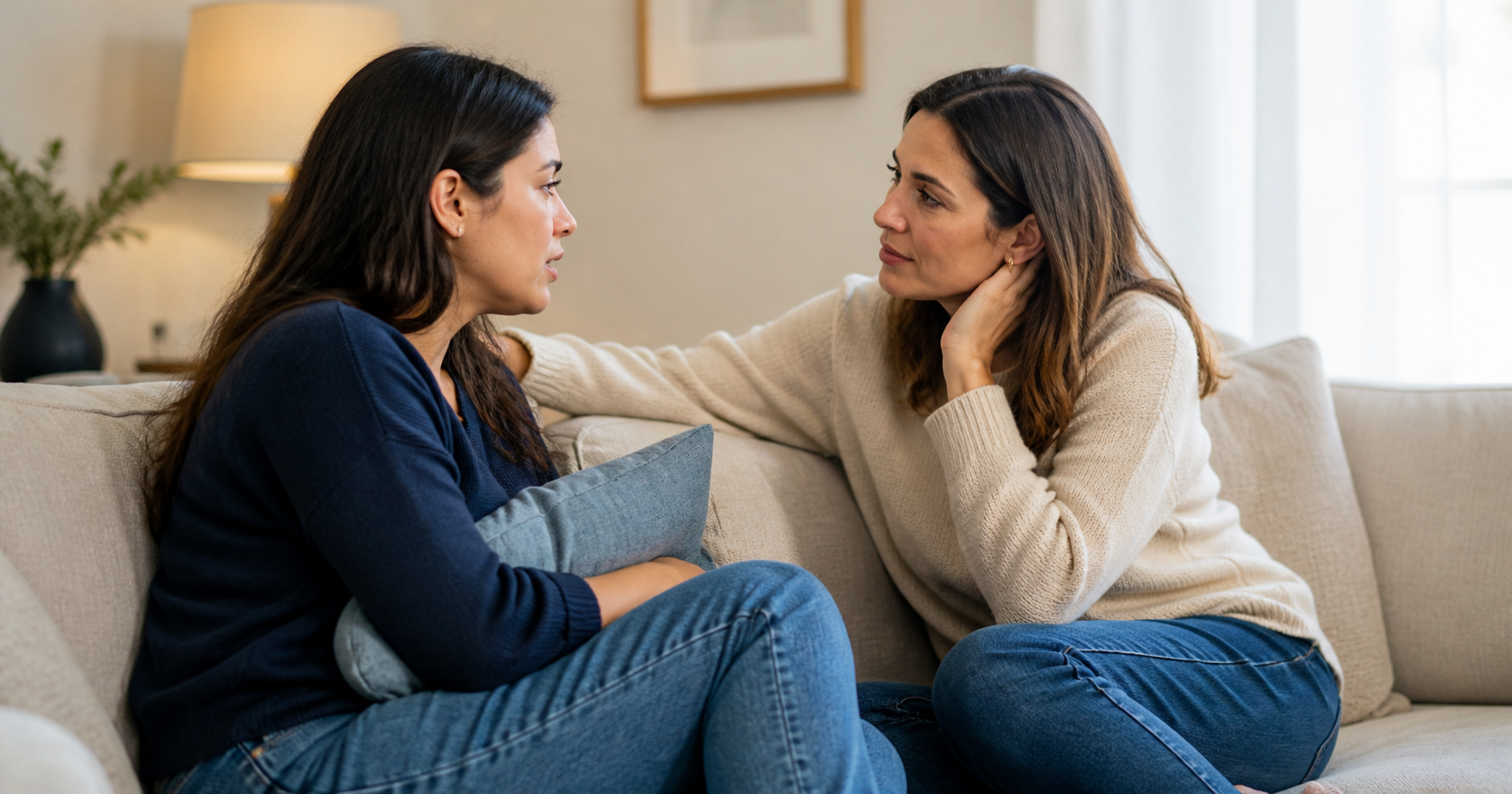
Emotional validation in relationships means recognizing that another person’s emotional experience is real for them. It does not mean you must agree with every thought, conclusion, or behaviour. It means you are willing to understand the feeling before you judge, correct, or defend.
For example, your partner may say, “I felt ignored when you did not respond.” You may not have intended to ignore them. You may have been busy, tired, or distracted. Still, their feeling of being ignored is real to them. A validating response would not begin with defence. It may begin with, “I can understand why that felt painful,” or, “I did not mean to hurt you, but I can see that you felt alone in that moment.”
An invalidating response would sound very different: “You are overreacting,” “That is nonsense,” “Why do you always create drama?” or “You should not feel this way.” The difference is powerful. Validation opens the door. Invalidation closes it. This is why emotional validation in relationships should become a daily communication skill, not only a crisis response.
Verywell Mind explains emotional validation as recognizing and accepting another person’s emotional experience without judgment. In relationship life, this matters because people often calm down when they feel understood, not when they feel corrected too quickly. Verywell Mind’s article on emotional validation gives a useful overview of this process.
Why Emotional Validation in Relationships Matters
Emotional validation in relationships matters because human beings do not only need solutions. They need emotional contact. They need to feel that their inner experience has a place in the relationship.
When a person feels validated, they often become less defensive. Their body relaxes. Their tone may soften. They may become more open to listening. They may even become more able to accept their own part in the problem.
But when a person feels invalidated, the opposite can happen. They may become louder, withdrawn, sarcastic, or deeply hurt. They may repeat themselves because they still do not feel understood. This is why many couples get stuck in the same argument. One person explains facts, while the other person is asking to be emotionally understood.
One person may say, “I already told you what happened.” The other may feel, “But you still did not understand how it felt.” Validation bridges this gap. It tells the person, “I may not fully agree, but I am trying to understand your emotional reality.” In this way, emotional validation in relationships helps facts and feelings meet in the same conversation.
Emotional Validation Does Not Mean Agreement

One common misunderstanding is that validation means agreement. This is not true. You can validate a feeling without agreeing with the full interpretation.
If someone says, “You do not care about me,” you do not have to agree with that statement. But you can validate the feeling beneath it. You may say, “I hear that you felt uncared for,” or, “I understand that my silence hurt you.” This response does not accept a false accusation. It acknowledges the emotional pain.
In healthy communication, two truths can exist together. You can say, “My intention was not to hurt you,” and also say, “I understand that you still felt hurt.” This is mature emotional communication. It protects both honesty and sensitivity. Emotional validation in relationships allows both people to remain truthful without becoming emotionally harsh.
The NHS guidance on maintaining healthy relationships and mental wellbeing emphasizes open conversation, listening, respect, and support as important parts of healthy relationships. Emotional validation is one way these qualities appear in daily communication.
Emotional Validation in Relationships and Feeling Heard
The deep human need behind validation is the need to be heard. Feeling heard does not mean that every demand is fulfilled. It means the person feels received, not dismissed.
A person may repeat something because they are not only repeating information. They are repeating the emotional request: “Please understand what this meant to me.” This happens in couples, families, friendships, and parent-child relationships. The facts may have been answered, but the emotion may still be untouched.
In emotionally validating relationships, people listen for the feeling behind the words. They ask themselves: Is this anger hiding hurt? Is this complaint hiding loneliness? Is this silence hiding fear? Is this repeated explanation hiding a need to feel valued?
When people listen at this level, relationships become softer. The same conversation that earlier became a fight may become a moment of connection.
Emotional Validation Is Different From Fixing
Many people try to fix emotions too quickly. They offer advice, logic, solutions, or correction before the other person feels heard. Their intention may be good, but the impact may not feel supportive.
For example, if someone says, “I feel very tired and emotionally low,” a quick-fixing response may be, “Then sleep early,” “Do not think too much,” “You should exercise,” or “Just be positive.” These suggestions may be useful later, but they may feel cold in the beginning. The person may feel that their emotional state has been reduced to a simple problem.
A validating response is different. It may sound like, “That sounds heavy,” “You have been carrying a lot,” “I can see why you feel drained,” or “Tell me what has been feeling most difficult.” After validation, advice may become easier to receive. The order matters: first connection, then correction; first understanding, then solution.
How Emotional Validation in Relationships Reduces Conflict
Conflict is one of the most important places where validation is needed. During conflict, both people usually want to be understood. But because both feel hurt, both may become defensive.
One person says, “You never listen.” The other person replies, “That is not true. I always listen.” Now the first person feels even more unheard, and the second person feels falsely accused. The conflict grows.
A validating response would be different: “You felt unheard in that moment. I want to understand what I missed.” This does not mean accepting the word “never.” It means responding to the pain beneath the word.
Emotional validation in relationships can reduce escalation because it calms the emotional threat. It tells the other person that they do not need to fight harder to be seen. The American Psychological Association’s article on healthy relationships highlights communication and regular emotional check-ins as important for relationship health. In conflict, validation becomes one of the safest ways to begin that check-in.
When Emotional Invalidation Hurts
Emotional invalidation happens when a person’s feelings are dismissed, minimized, mocked, ignored, or judged. It may happen directly through sentences like “You are too sensitive,” “This is not a big deal,” “You always create problems,” or “You should not feel this way.” It may also happen indirectly through silence, topic-changing, phone scrolling, laughing at serious feelings, or giving advice without listening.
Over time, emotional invalidation can make a person doubt their own feelings. They may start asking, “Am I wrong to feel this?” “Am I too much?” “Should I stop sharing?” or “Is my pain even real?” This can damage self-trust and weaken the relationship.
Invalidation does not always come from cruelty. Sometimes it comes from discomfort. Some people were never taught how to sit with feelings. They become anxious when someone shares pain, so they try to shut it down quickly. Still, the impact matters. A relationship becomes healthier when people learn to respond with care, not dismissal. Emotional validation in relationships helps people pause before rejecting, correcting, or minimizing another person’s feelings.
Emotional Validation in Relationships and Attachment Safety

Attachment and validation are closely connected. When people feel emotionally validated, they feel safer in the bond. They feel that their inner world matters. They feel less alone.
When people feel repeatedly invalidated, attachment insecurity can increase. A person with anxious attachment may become more worried, clingy, or reassurance-seeking. A person with avoidant patterns may withdraw further and share less.
This is why emotional validation in relationships is not only about words. It affects the emotional nervous system of the relationship. It can make closeness feel safer. The Cleveland Clinic overview of attachment styles explains that attachment styles influence how people connect and relate in adulthood. Emotional validation can support a more secure relational environment because it gives feelings a safer place to be expressed.
In simple words, validation says, “Your emotional experience has a place here.” For many people, that itself is healing.
Emotional Validation in Relationships and Marriage

Marriage requires more than practical responsibility. It also requires emotional responsiveness. A spouse may provide money, food, transport, household support, or family management, but if feelings are repeatedly dismissed, the other partner may still feel alone.
In marriage, emotional validation may look like listening without immediately defending. It may mean acknowledging the partner’s tiredness. It may mean saying, “I understand that this hurt you,” even when you see the situation differently.
Many marital conflicts become worse because both partners want validation at the same time. The wife may want her emotional pain acknowledged. The husband may want his effort recognized. One may want support from family pressure. The other may want appreciation for responsibility. Both needs may be real.
A validating marital conversation allows space for both sides. It does not make one person the permanent victim and the other the permanent problem. It says, “Let us understand what both of us are carrying.” This kind of conversation can change the emotional climate of a marriage. Emotional validation in relationships gives both partners a safer way to speak about pain, effort, and unmet needs.
Emotional Validation Within Families
Family relationships often struggle with validation because family members assume familiarity means understanding. A parent may think, “I know what is best for you.” A child may think, “You never understand me.” A spouse may think, “My feelings are obvious.” A sibling may speak casually without realizing the emotional impact.
In families, emotional validation does not mean approving every choice. It means acknowledging the feeling before guiding the person. A parent can say, “I may not agree with your decision, but I can see that you are feeling pressured.” A spouse can say, “I did not realize this was hurting you so much.” A child can say, “I understand you are worried about me, but I need you to hear my side also.”
Such sentences soften family communication. They reduce the need for shouting, withdrawal, or silent resentment. In Indian family systems, validation is especially important because duty, respect, sacrifice, expectation, and emotional bonding often exist together. Without validation, guidance can feel like control. With validation, guidance feels more human.
Emotional Validation in Relationships and Boundaries
Validation does not mean accepting everything. Some emotions may be real, but the behaviour that follows may still need boundaries. A person may feel hurt, and that feeling can be validated. But shouting, insulting, threatening, or emotionally pressuring others still needs a limit.
A balanced response may sound like, “I understand that you are hurt, but I cannot continue if you shout,” or, “I can listen to your pain, but I cannot accept insults.” This is where validation and boundaries meet. One protects the feeling. The other protects safety.
A healthy relationship needs both. Validation without boundaries can become emotional over-carrying. Boundaries without validation can feel cold and rejecting. Together, they create mature emotional safety. This connects with our earlier article, Love Without Losing Yourself, where we discussed how closeness and self-respect must remain together.
How to Practice Emotional Validation in Relationships
Practicing emotional validation does not require perfect language. It requires presence, patience, and willingness to understand.
Start by listening without interrupting. Let the person complete their feeling before you explain your side. Then name the emotion gently. You can say, “It sounds like you felt hurt,” or “I can see this made you anxious.” Naming the emotion helps the person feel seen.
Next, acknowledge the meaning. You can say, “I understand why that mattered to you,” or “I can see why my response felt distant.” After that, ask what is needed: “Do you need me to listen, explain, apologize, or help find a solution?” This question prevents unnecessary fixing.
Finally, respond honestly. Validation should not become fake agreement. It should remain sincere. If you do not fully understand, you can say, “I am trying to understand. Please explain it slowly.” These small steps can change the quality of communication.
Helpful and Unhelpful Emotional Validation Responses
Some simple validating statements can help daily relationships. You can say, “I can understand why that felt painful,” “That must have been difficult for you,” “I did not see it that way before, but I want to understand,” or “I may see it differently, but I do not want to dismiss your pain.”
You can also say, “I can hear that you felt alone in that moment,” “Let us slow down and understand this properly,” or “I am here; please tell me what hurt the most.” These sentences do not solve everything, but they reduce emotional threat.
On the other hand, try to avoid sentences such as “You are overthinking,” “Forget it,” “It is not a big deal,” “You always behave like this,” “Other people have bigger problems,” “Why are you so sensitive?” or “I do not have time for this drama.” These sentences may shut the conversation quickly, but they leave emotional residue. The person may stop speaking, but they may not stop hurting.
A better approach is to validate first and guide later. Instead of saying, “You are overthinking,” try saying, “I can see this is troubling you. Let us slow it down together.”
Self-Validation Comes First
Many people seek validation from others because they have never learned to validate themselves. They may doubt their feelings, judge their reactions, or feel ashamed of needing emotional support.
Self-validation means saying to yourself, “My feeling is real, even if I still need to understand it better.” It means you can be hurt without becoming helpless. It means you can acknowledge pain without attacking yourself. It means you can respect your emotions and still respond maturely.
Self-validation does not mean believing every thought. It means respecting the emotional experience enough to understand it. When self-validation grows, the person becomes less desperate for others to agree. They can still ask for care, but they do not collapse when someone fails to understand. This creates emotional strength.
How Emotional Validation in Relationships Supports Repair

Repair is difficult without validation. If one person says, “You hurt me,” and the other replies, “No, I did not,” the repair stops. The first person now carries two pains: the original hurt and the pain of dismissal.
A repair conversation begins better when someone says, “I did not realize it hurt you that much. I want to understand.” This sentence creates space for healing. It does not require immediate guilt. It requires emotional responsibility.
In strong relationships, people do not only ask, “Who is right?” They also ask, “What happened to us emotionally?” This question creates a healing direction. Emotional validation helps repair because it allows both people to return to the emotional truth beneath the conflict. It helps them understand not only what happened, but what it meant.
When Validation Becomes One-Sided
Sometimes one person keeps validating, listening, adjusting, and understanding, while the other person rarely does the same. This can become emotionally draining.
Validation should not become emotional labour carried by only one person. A healthy relationship needs mutuality. Both people should try to understand each other’s emotional world.
If you are always the listener, always the emotional container, always the one who repairs, and always the one who adjusts, then validation may have turned into over-functioning. In such cases, boundaries become necessary. You can say, “I want to understand you, but I also need my feelings to be heard,” or, “I cannot be the only one holding this relationship emotionally.” This is not selfish. It is relational balance. Emotional validation in relationships should be mutual, otherwise one person may slowly become emotionally exhausted.
How a Therapist Can Help You
A therapist can help you understand why feeling unheard hurts so deeply, how emotional invalidation affects your self-worth, and why you may repeat the same conversations in search of validation. Therapy can support emotional regulation, self-validation, communication skills, boundary-setting, and relationship repair. It can also help couples learn how to validate feelings without losing honesty, self-respect, or emotional safety.
Welcome to Live Again
Welcome to Live Again. Live Again India Mental Wellness is supporting you — you are not alone. If you often feel unheard, dismissed, judged, or emotionally unseen in relationships, therapy can help you understand your inner experience with more clarity. Emotional validation can help relationships become safer, calmer, and more human. Your feelings deserve care, your voice deserves space, and your healing deserves support.
Today’s Reflection From The Therapy Room
In therapy, many people do not cry only because someone disagreed with them. They cry because nobody understood what the experience meant to them. They were heard at the level of words, but not held at the level of feeling.
Emotional validation is not a small courtesy. It is emotional nourishment. It tells a person, “Your inner world matters here.” A relationship becomes safer when people stop rushing to judge and start learning to receive.
Sometimes healing begins with one simple sentence: “I can understand why this hurt you.” That sentence may not fix everything. But it can open the door to repair.
This is the deeper value of emotional validation in relationships: when feelings are acknowledged, people no longer have to fight so hard to prove that they are human.
Related Reading: Emotional Respect in Relationships
L@A