

Narcissistic Traits Communication Harm
Repeated unhealthy communication can slowly make a person feel confused, unheard, and emotionally smaller in a relationship. This article explains how narcissistic traits can affect conversations through invalidation, blame-shifting, selective listening, and emotional distortion. It also shows how these patterns weaken self-worth, increase over-explaining, and create mental exhaustion over time. With awareness, healthier boundaries, and the right support, emotional clarity and safer communication can begin to return.

Narcissistic Traits Relationship Damage
Some relationships do not become harmful in one dramatic moment; they slowly weaken emotional safety, self-worth, and inner clarity. This article explains the difference between narcissistic traits and Narcissistic Personality Disorder, while showing how charm, control, and repeated invalidation can damage mental health. It also explores why people stay in such relationships and how confusion, guilt, and self-doubt grow over time. With awareness, boundaries, and the right support, healing and emotional recovery are possible.

How To Stop Overthinking
Overthinking can quietly turn small worries into heavy mental loops that drain energy, disturb sleep, and reduce clarity. This article explains why the mind gets stuck in repetitive thinking and how stress, insecurity, and uncertainty keep that cycle active. It also offers practical ways to interrupt overthinking through awareness, action, routine, and body-based calming. With the right support, a busy mind can slowly become clearer, steadier, and easier to live with.

What Is Emotional Fog?
There are days when nothing feels fully wrong, yet nothing feels fully clear either.
Emotional fog is a quiet state of mental haze, emotional distance, and inner disconnection.
It often grows through stress, poor sleep, overload, and unprocessed emotions.
With gentle structure, grounding, and support, the mind can slowly begin to feel clear again

Small Things Feel Big
Sometimes life does not break suddenly-it slowly starts feeling dull, tired, and emotionally distant.
This article explores how energy, hope, and joy can return through simple human steps.
Feeling alive again does not require a perfect life, only a gentle and meaningful restart.
With light, movement, connection, and purpose, life can begin to feel warmer again.
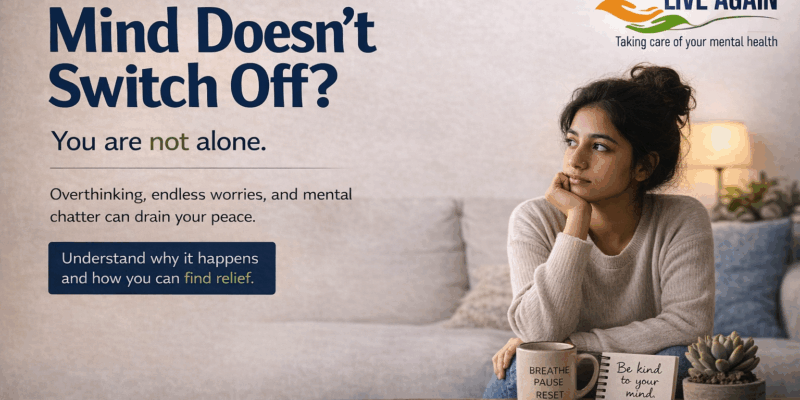
Mind Doesn’t Switch Off
When the mind does not switch off, even rest can feel tiring.
Overthinking, emotional backlog, and anxiety often keep the brain active.
This article explains why mental chatter continues and how calm can return.
With the right understanding and support, your mind can learn to rest again.

Mental Tiredness Without Work
Many people feel mentally tired even on days that do not look very demanding from the outside.
Mental tiredness without work can come from stress, overthinking, digital overload, and poor recovery.
This article explains how the brain, nervous system, and emotional load can quietly drain mental energy.
Sometimes the mind does not need judgment – it needs restoration.

Attention Fatigue Mental Health
Many people today feel mentally busy, yet unable to hold focus for long.
Attention fatigue can develop when the mind is overloaded, overstimulated, and under-rested.
This article explores how modern life weakens concentration, affects emotional balance, and tires the brain.
Sometimes the problem is not laziness – it is a mind that needs recovery.
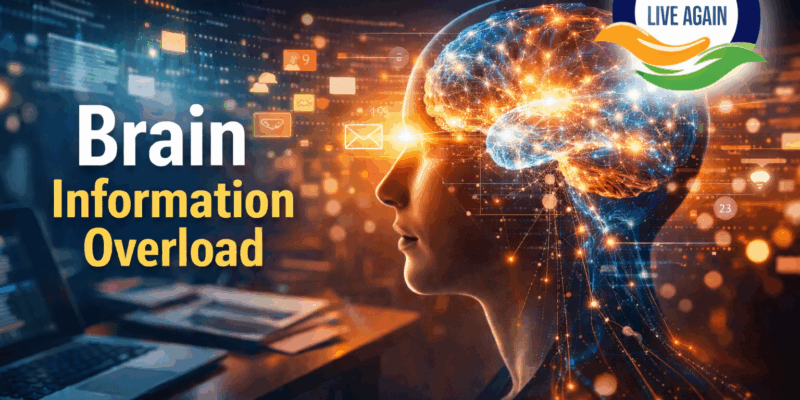
Brain Information Overload
The brain can process a lot, but it is not designed for nonstop input without rest.
Too much information can crowd attention, increase stress, and disturb emotional balance.
This article explores how overload affects mental clarity, the nervous system, and everyday mental health.
Sometimes the mind does not need more input – it needs more space to recover.

Information Consumption Mental Health
In today’s world, information is constant, but inner peace is not.
From newspapers to endless feeds, the way we consume information has changed our mental space deeply.
This article explores how overload, scrolling, and algorithmic exposure can affect anxiety, attention, and emotional balance.
Sometimes better mental health begins not with more information, but with a healthier way of receiving it
L@A