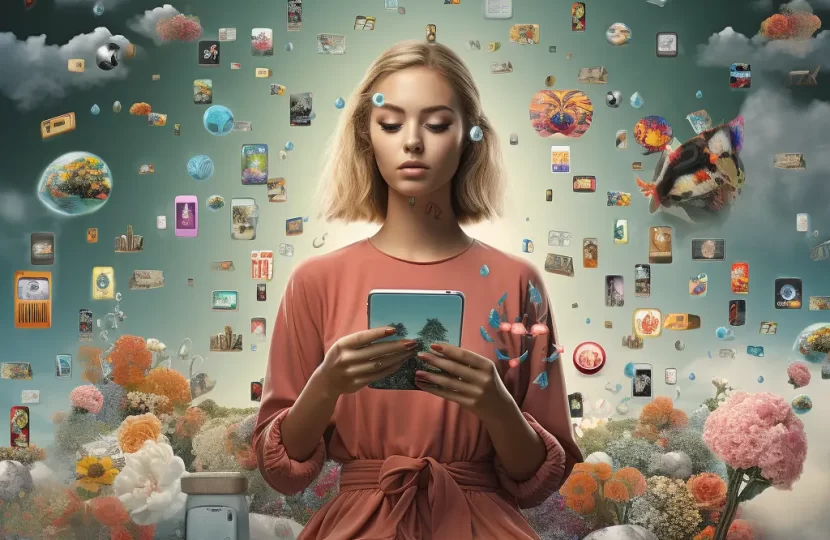
Understanding the Social Media Mirror Effect Phenomenon
The Social Media Mirror Effect has emerged as one of the most significant psychological phenomena of our digital era. This complex psychological process occurs when the content we consume and personas we create on digital platforms begin to reflect, distort, and fundamentally reshape our internal self-image and mental health. Unlike traditional media consumption, social media creates an interactive feedback loop that transforms passive viewing into active psychological conditioning.
Social Media Mirror Effect manifests when our screens become more than entertainment devices—they evolve into emotional mirrors that reflect our deepest insecurities, desires, and psychological patterns back to us. Psychological science demonstrates the impacts of social media use, especially on young people, including misinformation, friendships, peer groups, and relationships according to the American Psychological Association. This digital reflection process creates lasting changes in how we perceive ourselves, relate to others, and navigate our emotional landscape.
The phenomenon extends beyond simple screen time concerns. It represents a fundamental shift in how human consciousness interacts with technology, where the boundary between our digital persona and authentic self becomes increasingly blurred. Research indicates that prolonged exposure to curated digital content can alter neural pathways associated with self-perception, emotional regulation, and social comparison behaviors.
Understanding Social Media Mirror Effect requires recognizing that modern platforms operate as sophisticated psychological laboratories, constantly analyzing user behavior, emotional responses, and engagement patterns to create personalized content streams that both reflect and influence our mental states.
Digital Identity and the Social Media Mirror Effect
Digital identity formation represents one of the most profound aspects of Social Media Mirror Effect. Modern individuals develop complex online personas that often diverge significantly from their offline selves, creating psychological tension between authentic identity and digital representation. This divergence can lead to identity fragmentation, where individuals struggle to integrate their various self-presentations into a cohesive sense of self.
The algorithm-driven nature of social media platforms intensifies this identity confusion by creating echo chambers that reinforce certain aspects of personality while suppressing others. Users may find themselves trapped in digital feedback loops where their online behavior becomes increasingly performative, designed to generate engagement rather than express authentic thoughts and feelings.
Young adults, in particular, experience heightened vulnerability to digital identity distortion during critical developmental periods. The Mental Health Foundation reports that just over one in five adults (22%) and 40% of teenagers said images on social media caused them to worry about their body image, highlighting how Social Media Mirror Effect directly impacts self-perception and body image during formative years.
Professional identity, romantic relationships, and social connections all become filtered through the lens of digital presentation, creating additional layers of complexity in how individuals understand themselves and their place in the world. The constant need to curate and manage multiple online identities can lead to emotional exhaustion and disconnection from authentic self-expression.
Psychological Mechanisms Behind Social Media Mirror Effect
The neurobiological foundations of Social Media Mirror Effect involve complex interactions between dopamine reward systems, mirror neuron activation, and social comparison processes. Every like, comment, share, and notification triggers dopamine release, creating addictive patterns that reinforce continued platform engagement regardless of emotional consequences.
Mirror neurons, originally discovered in the context of empathy and social learning, become hyperactivated during social media use as users unconsciously mirror the emotions, behaviors, and attitudes displayed in their feeds. This neurological mirroring process can lead to emotional contagion, where users absorb and internalize the emotional states of others without conscious awareness.
Social comparison theory takes on new dimensions in digital environments where individuals have access to carefully curated representations of thousands of other lives. The human brain, evolved for small tribal communities, becomes overwhelmed by constant exposure to social comparison opportunities, leading to chronic feelings of inadequacy and competitive stress.
Attention residue, a psychological phenomenon where part of our cognitive resources remain focused on previous tasks, becomes particularly problematic with social media use. Users often carry emotional residue from their digital interactions into offline experiences, creating persistent background anxiety and emotional dysregulation.
Emotional Consequences of Social Media Mirror Effect
Social Media Mirror Effect generates profound emotional consequences that extend far beyond temporary mood fluctuations. Chronic exposure to curated content creates persistent anxiety, depression, and emotional instability as users internalize unrealistic standards and comparison-based self-evaluation methods.
Emotional amplification represents another critical aspect of this phenomenon, where platforms algorithmically intensify whatever emotional state users bring to their digital experience. Sadness becomes depression, anger becomes rage, and insecurity becomes self-hatred through carefully designed engagement mechanisms that prioritize emotional intensity over emotional wellbeing.
The NHS England acknowledges that 2 in 5 surveyed said they had body image worries or negative body image after directly seeing something on social media, demonstrating the direct emotional impact of digital content consumption on mental health outcomes.
Fear of missing out (FOMO) evolves into more complex psychological patterns including fear of being forgotten, fear of irrelevance, and fear of authentic self-expression. Users develop performance anxiety around their digital presence, constantly monitoring engagement metrics as measures of personal worth and social acceptance.
Emotional numbing paradoxically occurs alongside emotional amplification, as users become desensitized to genuine emotional experiences while remaining hyperreactive to digital stimuli. This creates a psychological state where authentic emotions feel muted while artificial digital emotions feel intensely real.
Body Image and Social Media Mirror Effect
Body image distortion represents one of the most visible and dangerous manifestations of Social Media Mirror Effect. Digital filters, photo editing applications, and beauty enhancement tools create unrealistic beauty standards that users internalize as normal or attainable, leading to widespread body dysmorphia and self-perception disorders.
The Mental Health Foundation research reveals that worries about body image can lead to mental health problems and, in some instances, are linked to self-harm and suicidal thoughts and feelings, highlighting the severe consequences of Social Media Mirror Effect on physical self-perception.
Constant exposure to filtered and edited images creates cognitive distortions where users begin to perceive their natural appearance as inadequate or flawed. This phenomenon particularly affects adolescents and young adults whose self-concept is still developing and who may lack the cognitive resources to critically evaluate digital manipulation.
The democratization of photo editing tools means that virtually every image on social media platforms has been altered to some degree, creating an entirely artificial visual environment that users unconsciously accept as reality. This digital environment becomes the reference point for self-evaluation, leading to impossible beauty standards and chronic dissatisfaction with physical appearance.
Professional cosmetic procedures have increased dramatically among young people who seek to match their physical appearance to their filtered digital images, representing a concerning real-world manifestation of Social Media Mirror Effect on body image and self-perception.
Social Comparison and Social Media Mirror Effect
Social comparison processes become hyperactivated and distorted within Social Media Mirror Effect frameworks. Traditional social comparison occurred within limited social circles where individuals could observe complete life contexts and understand the full spectrum of others’ experiences, both positive and challenging.
Digital platforms present carefully curated highlight reels that eliminate context, struggle, and authentic human complexity, creating impossible comparison standards. Users compare their complete, unfiltered life experience to others’ carefully selected and enhanced digital presentations, leading to systematic undervaluation of their own accomplishments and experiences.
Upward social comparison, where individuals compare themselves to those perceived as superior, becomes the dominant mode of social evaluation on digital platforms. Algorithm design amplifies aspirational content and success stories while suppressing ordinary or challenging life experiences, creating a distorted social reality.
The scale of social comparison expands exponentially in digital environments, where users may unconsciously compare themselves to hundreds or thousands of other individuals daily. This volume of comparison far exceeds human psychological capacity for healthy social evaluation, leading to comparison fatigue and chronic inadequacy feelings.
Temporal comparison also becomes distorted as users compare their current life circumstances to idealized past or future projections presented by others online, creating additional layers of dissatisfaction and unrealistic expectation formation.
Anxiety and Social Media Mirror Effect
Anxiety disorders have shown significant correlation with intensive social media use, particularly as Social Media Mirror Effect intensifies worry patterns and catastrophic thinking. The constant availability of social comparison opportunities creates persistent background anxiety as users remain hypervigilant about their social standing and digital presentation.
Performance anxiety around digital presence becomes a significant source of stress as users feel pressured to maintain consistent online engagement, create compelling content, and respond appropriately to social interactions. This performance pressure extends beyond conscious social media use into daily life as individuals consider how their experiences might translate into digital content.
Validation anxiety emerges when users become dependent on digital feedback for self-worth validation, creating emotional instability tied to unpredictable algorithm behavior and social media engagement patterns. The intermittent reinforcement schedule of social media notifications mirrors addictive gambling mechanisms, creating persistent anxiety around digital validation seeking.
Social anxiety paradoxically increases despite increased digital connection opportunities, as users become more comfortable with curated digital interaction than authentic face-to-face communication. This creates a feedback loop where social media becomes both the source of and attempted solution for social anxiety symptoms.
The 24/7 nature of digital platforms means that Social Media Mirror Effect anxiety never fully resolves, as users remain constantly accessible to social comparison, digital drama, and performance pressure even during traditionally private or restful periods.
Digital Wellness and Social Media Mirror Effect
Digital wellness strategies must address Social Media Mirror Effect comprehensively rather than focusing solely on screen time reduction. Effective digital wellness involves developing metacognitive awareness of how digital content affects thought patterns, emotional states, and behavioral choices throughout daily life.
Mindful consumption practices help users recognize when Social Media Mirror Effect is occurring and implement conscious choices about content engagement. This includes identifying personal trigger content, understanding individual vulnerability patterns, and developing alternative coping strategies for emotional regulation.
Boundary setting becomes crucial for managing Social Media Mirror Effect, including time boundaries, content boundaries, and emotional boundaries around digital platform use. Users benefit from creating clear separation between digital and offline identity development, ensuring that authentic self-development continues independently of digital feedback.
Curating digital environments to support mental health rather than exploit psychological vulnerabilities requires active effort to seek diverse, realistic, and supportive content while limiting exposure to comparison-inducing or emotionally destabilizing material.
Regular digital detox periods allow users to reconnect with offline identity, emotional regulation systems, and authentic relationship patterns that may become suppressed during intensive digital engagement periods.
Therapeutic Interventions for Social Media Mirror Effect
Professional therapeutic intervention becomes necessary when Social Media Mirror Effect significantly impairs daily functioning, emotional regulation, or authentic relationship formation. Cognitive-behavioral therapy approaches can help individuals identify and modify thought patterns reinforced by digital platform use.
Dialectical behavior therapy techniques prove particularly effective for managing emotional dysregulation associated with Social Media Mirror Effect, teaching users to tolerate distressing emotions without turning to digital validation seeking or comparison behaviors.
Identity work becomes central to therapeutic intervention, helping individuals distinguish between authentic self-concept and digitally influenced self-perception. This process involves exploring values, interests, and personal characteristics that exist independently of digital feedback or social comparison.
Mindfulness-based interventions help users develop present-moment awareness that can interrupt automatic Social Media Mirror Effect patterns and create space for conscious choice about digital engagement and emotional response.
Family therapy may be beneficial when Social Media Mirror Effect impacts family relationships or when family members need support understanding and responding to digital mental health challenges.
How Therapists Can Help You
Professional therapists provide specialized support for navigating Social Media Mirror Effect by offering evidence-based strategies to rebuild authentic self-worth independent of digital validation. They help identify personal triggers and develop healthy boundaries between online personas and genuine identity. Through guided sessions, therapists assist in processing comparison-based anxiety and developing emotional regulation skills that function effectively in digital environments. Therapeutic support creates a safe space to explore how Social Media Mirror Effect may be impacting your relationships, self-perception, and overall mental wellness.
Welcome to Live Again India
Live Again India Mental Wellness stands ready to support your journey toward authentic self-connection beyond the digital mirror. Our compassionate mental health professionals understand the unique challenges of Social Media Mirror Effect and provide personalized treatment approaches for your specific needs. You are not alone in navigating the complex relationship between technology and mental wellness—our experienced team walks alongside you every step of the healing process. We believe in your capacity for genuine self-acceptance and authentic relationship formation that transcends digital validation and social comparison patterns.