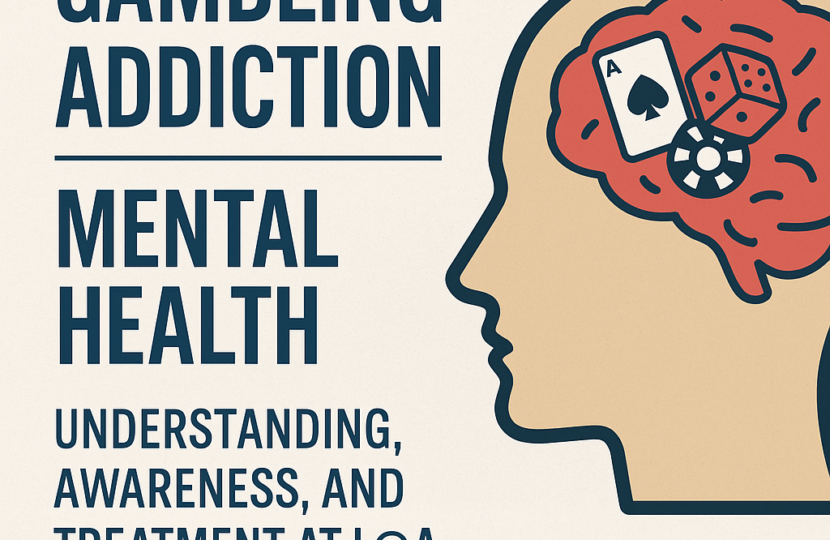
Gambling may begin as a social pastime or an occasional thrill, but for many, it transforms into a compulsive behavior that deeply impacts the brain, emotions, relationships, and self-identity. This shift from leisure to addiction is not a failure of willpower — it’s a recognized psychological disorder with identifiable patterns and treatable roots. Understanding Gambling Addiction Mental Health.
Gambling Addiction, also known as Gambling Disorder, is classified as a behavioral addiction in the DSM-5. It shares similar neural and psychological mechanisms with substance abuse, leading to significant disruption in an individual’s personal, financial, and professional life.
At L@A – Live Again India Mental Wellness, we treat gambling addiction as a serious mental health condition that requires structured therapeutic care, emotional safety, and conscious recovery models.
📊 Etiology: What Causes Gambling Addiction?
1. 🧠 Neurobiological Factors
Gambling activates the brain’s dopaminergic reward system, particularly the mesolimbic pathway involving the nucleus accumbens and ventral tegmental area. These are the same brain regions triggered by drugs like cocaine and methamphetamine.
With each win, or even the anticipation of a win, the brain releases a surge of dopamine — the “feel-good” neurotransmitter. Over time, the brain builds tolerance, demanding higher risks and more frequent betting to achieve the same emotional high. The individual isn’t chasing money — they’re chasing neurological stimulation. This leads to:
- Craving the sensation of gambling
- Withdrawal-like symptoms during abstinence
- Loss of control despite negative consequences
2. 🫠 Psychological Vulnerability
People with unprocessed trauma, early childhood neglect, anxiety, depression, or identity confusion may use gambling to regulate internal distress. Gambling becomes a maladaptive coping mechanism that provides:
- A false sense of control over chaos
- Temporary escape from loneliness or failure
- A spike of identity or self-worth when winning
This psychological reinforcement overrides rational judgment and keeps the addiction hidden, even from the individual themselves.
3. 🌎 Environmental Triggers
Modern society has normalized gambling through:
- Easy access to online platforms and mobile apps
- Cultural celebration of high-risk wealth (e.g., stock market, crypto)
- Peer influence and celebrity endorsements
- Targeted advertisements exploiting emotional states (loneliness, boredom)
Environmental reinforcement paired with emotional vulnerability becomes a dangerous cocktail, particularly for adolescents and young adults.
4. 🪡 Cognitive Distortions
Many gamblers suffer from irrational thinking patterns, such as:
- “I’m due for a win”
- “If I just play one more round, I’ll recover my losses”
- “I can control the outcome”
- “This game has a pattern I’ve cracked”
These beliefs are strengthened by the illusion of control, superstitions, and selective memory (remembering wins, forgetting losses). These cognitive errors lock individuals into a reinforcing loop that rationalizes continued risk.
⚠️ Symptoms of Gambling Addiction
Recognizing the signs of gambling addiction is crucial for early intervention and effective treatment. Symptoms may include:
- Constant preoccupation with gambling-related thoughts – Persistent mental focus on strategies, odds, wins, losses, or when the next opportunity to gamble will arise.
- Gambling with increasing amounts of money to feel excitement – A tolerance effect that mirrors substance abuse, where more risk is needed to achieve the same thrill.
- Lying or hiding behavior from family and friends – Concealing gambling habits out of guilt, shame, or fear of confrontation.
- Chasing losses with more gambling – A compulsive cycle of trying to recover lost money, often leading to deeper financial and emotional harm.
- Emotional breakdowns when unable to gamble – Experiencing irritability, restlessness, or even depressive symptoms when restricted from gambling.
- Jeopardizing jobs, relationships, or education – Prioritizing gambling over responsibilities, often resulting in severe social and occupational consequences.
- Frequent borrowing or stealing money – Desperation to fund gambling behavior, sometimes crossing ethical or legal boundaries.
- Depression, guilt, shame, and self-harm ideation – Internalized pain and self-judgment, particularly after losses or exposure.
🔥 Impact on Life
Gambling addiction can dismantle a person’s external world and internal experience.
💸 Financial Fallout
Gambling often leads to significant economic distress. Individuals may face maxed-out credit cards, defaulted loans, and savings depletion. In extreme cases, the addiction can push individuals toward illegal financial behaviors such as fraud or theft. This financial instability can cause long-term damage to one’s credit, career, and basic sense of security.
💔 Emotional Despair
The emotional toll of gambling addiction includes chronic anxiety, feelings of guilt, and emotional numbness. After repeated losses or destructive behavior, individuals often spiral into shame, believing they are unworthy or incapable of change. These emotional wounds deepen with isolation, as many are too afraid to open up to their support systems.
🚨 Identity Crisis
Many clients express that gambling becomes part of their identity — not just an activity but a lens through which they view themselves. Statements like “I only feel alive when I’m taking a risk” reflect a deeper confusion about self-worth and emotional regulation. Without the stimulation of gambling, some feel directionless or hollow.
🏯 Social Breakdown
Relationships often suffer greatly. Loved ones may feel betrayed, manipulated, or emotionally exhausted. Trust gets eroded with every relapse or lie. Eventually, the person struggling may retreat from social connections altogether to avoid judgment, perpetuating a cycle of loneliness and compulsive behavior.
🤝 Self-Awareness and Conscious Reflection
The shift from addiction to healing begins with this question:
“Am I escaping life… or engaging with it?”
At L@A, we encourage clients to begin journaling their reflections across three key dimensions:
- Thoughts before gambling – Understanding what drives the urge begins with identifying the thought patterns preceding it. Whether it’s boredom, anxiety, or the belief that “this time will be different,” writing these down brings awareness to automatic behaviors.
- Emotions after losses – After a gambling episode, especially one involving losses, clients often experience shame, anger, or sadness. Journaling these feelings helps release emotional buildup and replace avoidance with emotional processing.
- Core beliefs about control and luck – Many individuals unconsciously hold beliefs like “I can win it back” or “I’m just unlucky.” Reflecting on these core assumptions can reveal the irrational thinking that fuels continued gambling.
This daily reflection breaks unconscious loops, enhances self-regulation, and promotes mindful intervention — one insight at a time.
🎓 Treatment Options at L@A
🔹 Cognitive Behavioral Therapy (CBT)
CBT is a structured, evidence-based approach that helps clients identify and challenge distorted thinking patterns linked to gambling behavior. It supports clients in replacing harmful beliefs with more balanced ones, while also building practical emotional regulation and decision-making skills to prevent relapse.
🔹 Motivational Interviewing (MI)
MI is a client-centered communication technique designed to resolve ambivalence and strengthen motivation for change. It is especially useful in the early stages of treatment, helping clients uncover their own reasons for seeking recovery without confrontation or judgment.
🔹 Impulse Tracking Tools
Tools like the Urge Tracking Sheet allow clients to document urges in real time. By recording triggers, thoughts, emotions, and actions, clients and therapists can identify behavioral patterns and intervene before the cycle of addiction progresses.
🔹 Family Engagement Therapy
Family systems often bear the burden of addiction. This therapy involves loved ones in the healing process, restoring broken trust and establishing clear boundaries. It also educates families on supportive strategies without enabling the behavior.
🔹 Suicide and Safety Planning
For clients with suicidal ideation or self-harm risk, we implement comprehensive safety planning. This includes daily emotional check-ins, identification of personal anchors (e.g., meaningful people, goals), and immediate access to crisis support systems. Safety is always the first priority in the therapeutic process.
👍 How a Therapist Can Help
Therapists play a critical role in the recovery process by offering more than just techniques — they offer presence, understanding, and emotional containment. Gambling Addiction Mental Health
- Create an emotionally safe space without judgment – Clients dealing with gambling addiction often carry immense guilt and fear of rejection. A therapist offers a stable, compassionate environment where honesty can emerge without the fear of punishment.
- Help untangle shame from identity – Many individuals internalize their addiction as a personal failure. Therapists help separate the behavior from the person, fostering self-compassion and a renewed sense of worth.
- Identify unconscious motivations and cognitive traps – Through reflective questioning and analysis, therapists help clients uncover hidden patterns and beliefs that sustain their gambling behavior.
- Offer structure, support, and personalized treatment – Therapists provide consistent accountability while tailoring strategies to each client’s emotional, psychological, and relational needs.
Therapy isn’t about fixing — it’s about remembering who you are beneath the survival patterns and walking alongside someone as they reclaim their power, insight, and dignity.
💚 Welcome to Live Again India Mental Wellness (L@A)
Recovery is not a destination. It is a conscious lifestyle — one rooted in choice, self-respect, and presence.
At L@A, we don’t just treat behavior. We awaken the human being behind it. You are not your addiction. You are not broken. Gambling Addiction Mental Health.
You are becoming aware. And that is the beginning of everything.