

Overthinking at Night Insomnia
At night, the mind doesn’t “go crazy”—it tries to protect you by chasing certainty.
However, when the nervous system stays activated, thoughts speed up and sleep turns into a test.
Therefore, the goal isn’t to solve life at 2 AM; it’s to lower arousal and retrain the bed as a safety cue.
With small, consistent steps, the brain relearns quiet—and sleep returns more naturally.

Modern Dating Window Shopping
Modern dating can feel like a marketplace: swipe, compare, shortlist, and keep a “better” option open—until real connection starts feeling risky.
This window-shopping culture trains the brain on novelty, so stability can feel “boring,” and commitment can feel like a loss of freedom.
Over time, it fuels anxiety, ghosting uncertainty, and low trust—because people feel replaceable rather than chosen.
The solution is clarity + boundaries + consistency: date with intention, limit options, and build depth instead of endlessly browsing.
Emotional Clarity Big Decisions
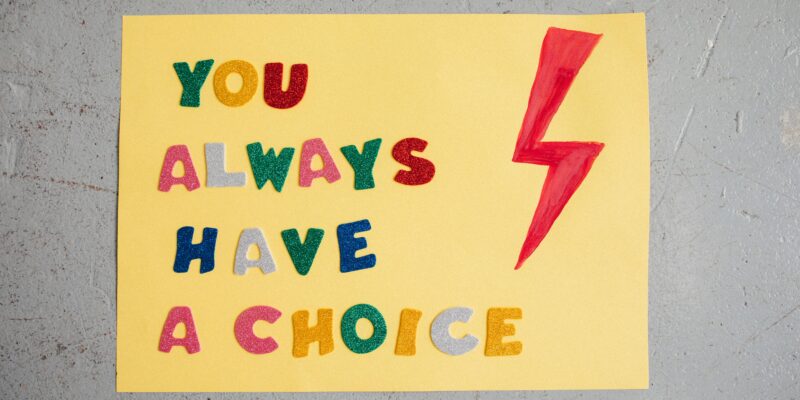
Big decisions don’t need urgency-they need stability. When emotions rise, the brain shifts into survival mode and choices become extreme. Use a simple sequence: Regulate → Reflect → Decide, and delay irreversible steps for 24–72 hours unless safety is at risk. With calm structure and support, you can choose from strength, not from fear.

Stay Calm and Consistent
A calm, practical guide for all ages-learn a 60‑second reset, the 3 Anchors, and a daily minimum plan to stay steady without forcing positivity.

Anger and Communication Skills
Anger becomes destructive when the nervous system takes over and communication turns into attack or shutdown. Regulate first, speak one clean boundary, and use time‑out with a return time. Replace blaming and repeated checking with structure – check‑in windows, response rules, and repair within 24 hours. When safety becomes behavioural, respect and connection return naturally.

Emotional Validation for Couples
Emotional validation helps couples feel heard before they try to solve a problem. It means understanding the feeling without necessarily agreeing with the opinion. When partners validate first, the nervous system calms and fights become shorter. With simple scripts and repair steps, connection returns faster and trust grows.

Reassurance-Seeking in Relationships
Reassurance gives relief – but relief fades when uncertainty stays. This is not “neediness”; it’s an alarm system asking for safety. Stop the loop by making safety behavioural: agreements, response windows, repair rules. When safety is predictable, your mind stops demanding proof every hour.

Overthinking and Decision Paralysis: 3‑Step Decision Protocol
Overthinking is not intelligence—it is anxiety disguised as responsibility. Use the 3‑step protocol (Clarify → Choose → Commit) to stop endless reopening. Decisions require structure, not perfection, and progress builds confidence. If fear and avoidance keep returning, treat it clinically—your nervous system may need retraining.
Dizziness Anxiety Panic Loop
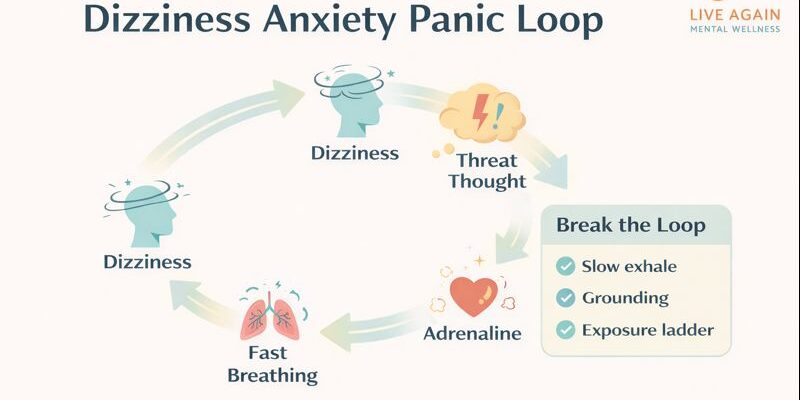
Dizziness can feel like a medical emergency, but for many people it becomes an anxiety–panic feedback loop driven by fear and adrenaline.
A sudden body sensation triggers a threat interpretation, which spikes arousal, tightens breathing, and amplifies light-headedness.
The goal is not to “fight” dizziness, but to retrain safety through slow exhale, grounding, and graded exposure to avoided situations.
With consistent CBT-style practice, the brain learns: “This sensation is uncomfortable, not dangerous”—and the loop weakens.
Generalized Anxiety Disorder Help
Generalized Anxiety Disorder Help starts when you stop treating worry as “thinking” and start treating it as a nervous-system threat loop.
GAD is persistent, hard-to-control worry with tension, fatigue, poor focus, and sleep disruption—often across health, performance, and future risks.
CBT works by correcting threat predictions, reducing safety behaviours, and building tolerance for uncertainty through structured exposure and practice.
With a stable routine, sleep protection, and guided therapy, your mind regains flexibility—and life stops being organised around fear.
L@A